

How to Measure LinkedIn ABM ROI

Struggling to prove LinkedIn ABM's impact on revenue? Here's the solution:
- Align Sales and Marketing Teams: Companies with aligned teams see a 208% revenue boost. Shared goals and frequent collaboration are key.
- Use the Right Tools: Combine LinkedIn Campaign Manager, Sales Navigator, CRMs like Salesforce, and marketing automation platforms like HubSpot for seamless tracking.
- Set Clear Metrics: Track ROI using this formula:
(Revenue Influenced by ABM – ABM Program Cost) / ABM Program Cost. Top programs report 7:1 ROI. - Attribution Models Matter: Multi-touch attribution works best for long B2B sales cycles, where LinkedIn ABM influences 73% of target account revenue.
- Track Costs and Metrics: Monitor media spend, technology, creative assets, and personnel. Key metrics include CPA, conversion rates, deal size, and pipeline velocity.
From ABM To ROI: Getting started and seeing results.
Setting Up LinkedIn ABM ROI Measurement
To effectively measure LinkedIn ABM ROI, it’s essential to lay a strong groundwork. This involves aligning your teams, equipping yourself with the right tools, and clearly defining your objectives to ensure everyone is working toward the same goals.
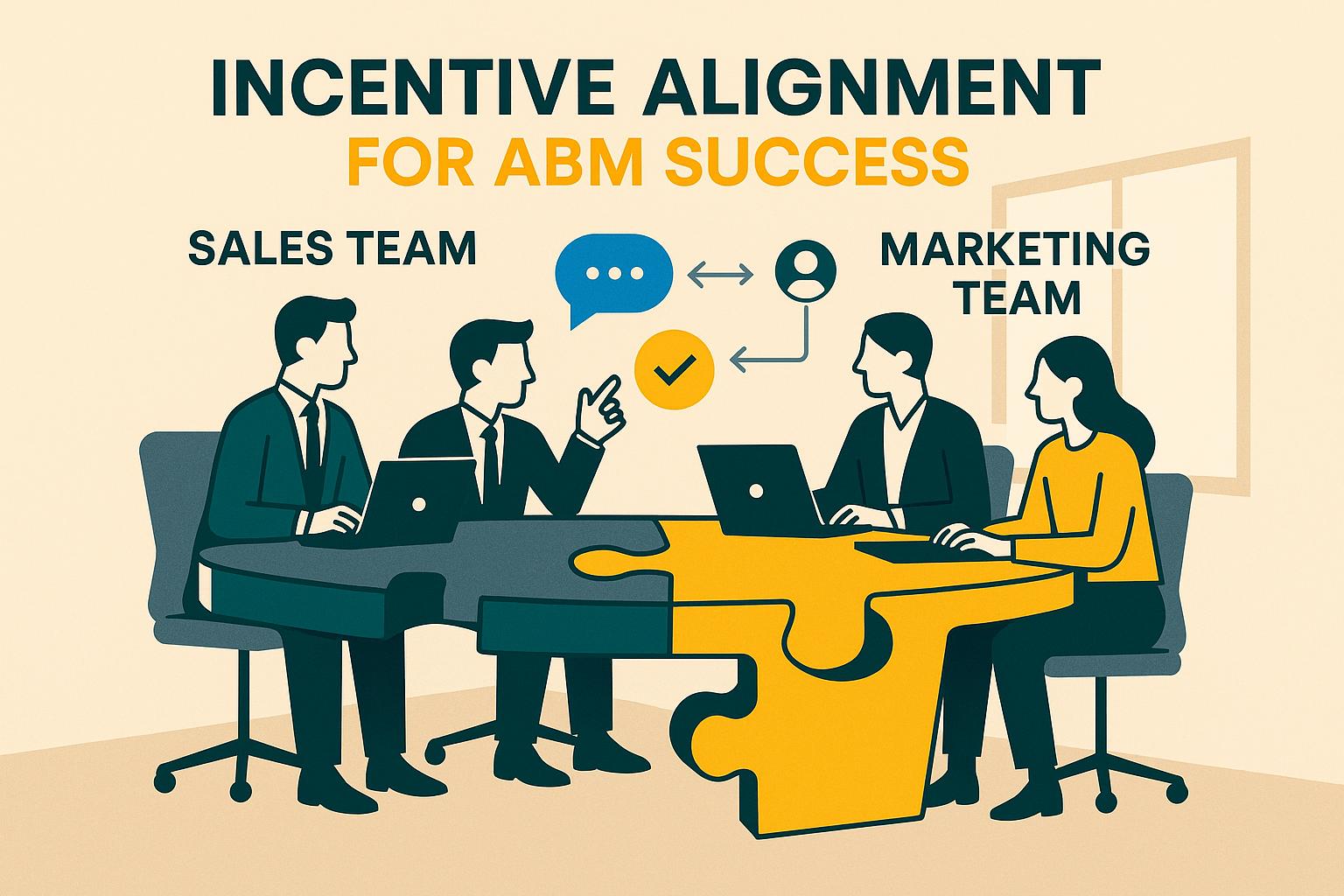
Aligning Sales and Marketing Teams
Companies with aligned sales and marketing teams experience a 208% boost in marketing-generated revenue [2]. On the other hand, misaligned teams can cost businesses over $1 trillion annually [3]. The key to avoiding these pitfalls? Establish shared goals from the start. With account-based marketing, marketers are 40% more likely to report alignment with sales strategies [2].
"Getting the sales and marketing teams aligned to a joint go-to-market strategy and defining the user journey are the keys to success." - Soum Dey, Global Head of Digital Experience Optimization, Thoughtworks [2]
A great example comes from NetSPI, which achieved a 61% increase in opportunities in just one quarter. By using targeted marketing tools, they effectively reached their ideal prospects. Maria Velasquez, their director of demand generation, shared how this success deepened the collaboration between sales and marketing:
"As we established trust with our sales team, we started to have more conversations around how we process leads, how we move prospects through the sales cycle, and how we send feedback to marketing regarding poor-fit accounts or accounts that need more nurture. We're working together, versus marketing working for sales or sales working without marketing support" [4].
To replicate this success, create cross-functional teams focused on your most valuable accounts. Schedule regular meetings to review progress, exchange insights, and refine strategies. Use a shared communication platform to ensure everyone has access to the same data and updates for your target accounts.
Required Tools for LinkedIn ABM ROI
Tracking LinkedIn ABM ROI requires integrating multiple tools to get a complete view of your campaign performance. Start with closed-loop reporting that connects LinkedIn Campaign Manager, your marketing automation platform, CRM system, ABM platform, and business intelligence tools [1].
Here’s how these tools come together:
- LinkedIn Campaign Manager: Your main platform for running ads.
- LinkedIn Sales Navigator: Helps you identify and track key leads within target companies.
- CRM systems: Tools like Salesforce or HubSpot Sales Hub track how LinkedIn interactions contribute to your pipeline and revenue [5].
- Marketing automation platforms: Platforms like HubSpot Marketing Hub or Marketo score leads and nurture prospects based on their LinkedIn activity [5].
AI-powered personalization tools are becoming increasingly important. Enterprise campaigns using AI-driven personalization tools see a 25% higher ROI [1]. For instance, companies leveraging tools like Karrot.ai report up to a 70% improvement in conversion rates compared to generic campaigns [1].
One enterprise software company targeted 1,000 accounts using AI-powered personalization and saw impressive results: a 187% increase in engagement, a 64% jump in MQL-to-opportunity conversions, and $12.4 million in pipeline influence within six months [1].
Don’t forget to include LinkedIn’s Insight Tag to track website conversions from your LinkedIn campaigns. This will give you a clearer picture of how your efforts are driving measurable results.
Setting Clear Objectives and Metrics
Clear KPIs are the backbone of any successful ABM program. Mature ABM programs are 70% more likely to report meaningful revenue impact than those with less-developed measurement frameworks [6]. Companies that define their measurement frameworks are also 2.5 times more likely to hit their ABM goals [6].
Work with both sales and marketing teams to establish ABM goals that align with broader business objectives, whether it’s increasing revenue, shortening sales cycles, or improving customer retention. Keep in mind that top-performing ABM programs deliver a 7:1 ROI, compared to an average of 3:1. They also achieve 27% higher win rates and 24% faster sales cycles than traditional marketing approaches [6].
Start by focusing on Tier 1 accounts - your highest-priority prospects. Companies with a clearly defined ideal customer profile (ICP) see 68% higher account win rates [1]. Segment these accounts based on factors like company size, location, growth rate, revenue, and product interest.
Within each target account, pinpoint key decision-makers and tailor your measurement strategy to reflect their engagement patterns. Different stakeholders interact with content in unique ways, so it’s crucial to track these variations. This approach helps address challenges like tracking long sales cycles or managing multiple touchpoints.
CreditXpert serves as a great example of how clarity in objectives pays off. Chase Arvanatis, their director of performance marketing, explained:
"There's immediate satisfaction when logging into ZoomInfo Marketing. I can see which companies we're targeting with ads and then easily adjust our messaging to align with their pain points that sales is telling us about. We can proactively and strategically get ahead of prospects and then monitor whether or not it reignites a sales conversation" [4].
With these foundational steps in place, the next priority is to accurately attribute revenue to your LinkedIn ABM efforts.
Revenue Attribution in LinkedIn ABM
Building on your measurement framework, the next step is connecting LinkedIn engagement to revenue. This involves tracking how target accounts interact with your campaigns and using the right attribution models to link those interactions to business outcomes.
Connecting Engagement to Revenue
The secret to effective revenue attribution is capturing every interaction your target accounts have with your LinkedIn campaigns. According to data, organizations with structured LinkedIn ABM strategies see 40% higher conversion rates compared to those with disconnected approaches [7]. This improvement comes from tying engagement metrics to revenue.
Use a closed-loop reporting system to follow the journey from the first LinkedIn ad impression to a closed deal. For example, a global enterprise software company used AI-driven personalization to target 1,000 enterprise accounts across various industries. By meticulously tracking engagement, they achieved a 187% increase in target account engagement, a 64% boost in MQL-to-opportunity conversion rates, and $12.4 million in influenced pipeline within six months [1].
Focus on four key engagement areas: website visits from LinkedIn traffic, ad interactions, content engagement, and sales team activities. These data points help you understand where accounts are in their buying process.
To enhance tracking, create an engagement scoring model that assigns different weights to interactions based on their likelihood of signaling purchase intent [1]. For instance, downloading a pricing guide might score higher than reading a blog post, while requesting a demo would rank even higher.
This detailed tracking is the foundation for choosing the right attribution model.
Attribution Models for LinkedIn ABM
Selecting the right attribution model is essential for measuring the true impact of your LinkedIn ABM campaigns. Multi-touch attribution models are especially effective for enterprise ABM efforts, where buying cycles are lengthy and involve multiple decision-makers [1].
Here’s a breakdown of three common attribution models:
| Attribution Model | How It Works | Best Used For |
|---|---|---|
| First-Touch Attribution | Credits the initial LinkedIn interaction | Evaluating awareness-building efforts |
| Last-Touch Attribution | Credits the final interaction before conversion | Measuring closing-stage performance |
| Multi-Touch Attribution | Distributes credit across all touchpoints | Comprehensive analysis of the buyer journey |
Multi-touch attribution shows that LinkedIn ABM influences 73% of total revenue from target accounts [9]. This model is particularly useful because it captures the entire buyer's journey, ensuring no touchpoint is overlooked [10].
A B2B SaaS company discovered through multi-touch attribution that mid-funnel retargeting ads converted better than top-of-funnel awareness efforts. They reallocated 40% of their budget to retargeting, targeting engaged but unconverted accounts. This shift reduced their cost per acquisition by 38% and shortened their sales cycle by two weeks [10].
Brandon Most, Head of Marketing at GoLinks, highlights the importance of attribution:
"Revenue Attribution Report's any touch attribution model gives us a more holistic view of impact" [11].
Multi-stage nurture sequences have also been shown to increase engagement by 67% compared to single-touch strategies [7], underscoring the value of multi-touch attribution for LinkedIn ABM campaigns.
With attribution models in place, it’s crucial to distinguish between direct and influenced revenue contributions.
Direct vs. Influenced Revenue
To fully understand your LinkedIn ABM impact, differentiate between direct revenue and influenced revenue.
- Direct revenue comes from deals directly linked to LinkedIn ABM campaigns, such as opportunities created from ad clicks or Sales Navigator outreach that led to closed deals.
- Influenced revenue includes deals where LinkedIn ABM played a supporting role, such as accounts engaging with LinkedIn content before being contacted by sales or deals that accelerated after LinkedIn campaign exposure.
Enterprise ABM efforts typically influence 73% of total revenue from target accounts, with advanced attribution models attributing 79% of opportunities to ABM efforts [1] [7]. This high percentage highlights how thorough tracking uncovers the broader impact of LinkedIn ABM.
When measuring influenced revenue, assess how LinkedIn ABM campaigns affect different stages of the sales funnel, including new opportunity creation, deal acceleration, account expansion, and competitive displacement [1].
91% of companies using ABM report an increase in their average deal size [13]. This growth often results from a combination of direct revenue generation and influenced revenue effects. For example, LinkedIn campaigns might spark initial interest while also shaping the scope and value of eventual deals.
Pipeline influence measures how many converted opportunities were impacted by ABM efforts versus those created independently [12]. By tracking both direct and influenced revenue, you gain a complete understanding of how LinkedIn ABM drives results for your business.
sbb-itb-7f1e12d
Calculating LinkedIn ABM ROI
Once you’ve gathered insights from revenue attribution, the next step is to calculate your LinkedIn ABM ROI. This step gives you clear numbers to showcase the value of your campaign and informs smarter spending decisions for future efforts.
The LinkedIn ABM ROI Formula
The formula for measuring LinkedIn ABM success is straightforward:
"ABM ROI = (Revenue Influenced by ABM – ABM Program Cost) / ABM Program Cost" [1]
This equation shows how much return you’re getting for every dollar spent. For example, if your campaign influenced $500,000 in revenue and cost $100,000 to run, your ROI would be 400% - a 4:1 return.
It’s no surprise that 97% of marketers say ABM delivers a better return compared to other marketing strategies [1].
However, pinpointing the revenue influenced by ABM can be tricky. That’s why it’s crucial to set up a framework to measure ROI before launching your LinkedIn ABM campaign. Consider your measurement timeline, account for all touchpoints, and ensure you fully calculate program costs.
Interestingly, enterprise LinkedIn ABM campaigns see a 25% higher measurable ROI when AI-powered personalization tools are used [1]. Closed-loop reporting between your marketing and sales systems can also make your calculations more precise [1].
To refine your ROI calculation, start by breaking down all the costs tied to your campaign.
Breaking Down ABM Program Costs
To calculate ROI accurately, you need to track all expenses related to your LinkedIn ABM campaign. These costs typically fall into four main categories: media spend, technology, creative assets, and personnel [15].
- Media spend: This includes your direct LinkedIn advertising costs. These expenses can vary, so it’s essential to monitor them closely.
- Technology: Costs here cover tools like LinkedIn Campaign Manager, third-party ABM platforms, CRM integrations, and analytics software. Keep in mind, LinkedIn campaigns often require minimum budgets.
- Creative assets: This includes the production of personalized content, such as video ads, carousel images, and landing pages. Be sure to account for both in-house resources and any fees for external agencies or freelancers.
- Personnel: Often the largest expense, this includes the time your marketing team spends on setup, management, and optimization, as well as the sales team’s efforts to follow up on LinkedIn-generated leads.
On average, businesses allocate 0%–20% of their total advertising budget to LinkedIn campaigns [15]. While LinkedIn ads are more expensive than platforms like Facebook or Google, they excel at targeting B2B audiences [16]. As an expert from Propensity puts it:
"ABM bid strategy is about precision, not scale. Pay more per click, but make every click count." – Propensity [17]
Once you’ve outlined your costs, focus on key metrics to further validate and optimize your ROI.
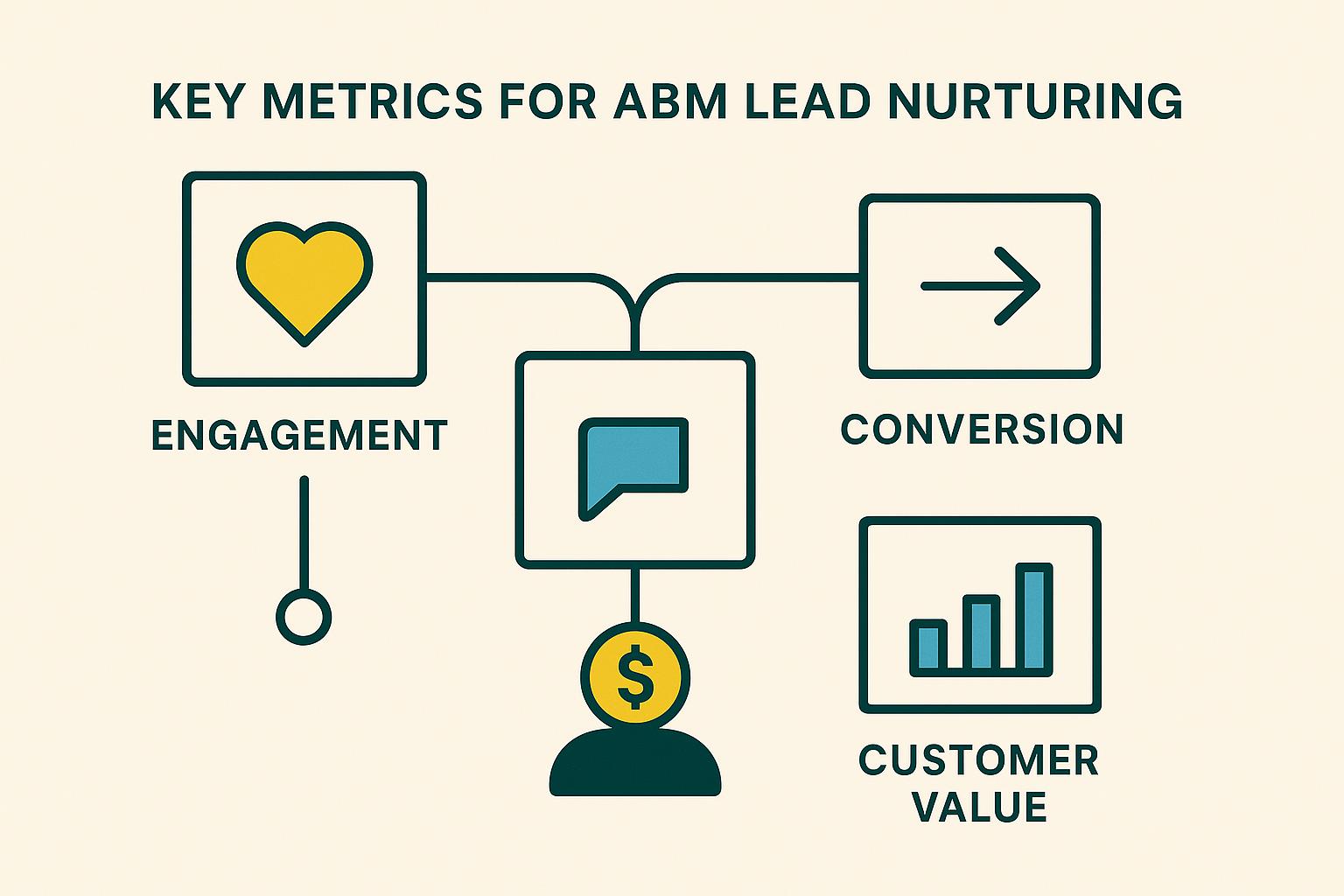
Key Metrics for LinkedIn ABM
While the basic ROI formula is essential, additional metrics can provide a deeper understanding of your LinkedIn ABM performance and highlight areas for improvement:
- Cost per Acquisition (CPA): Tracks how much you spend to gain each new customer. Well-optimized campaigns can significantly lower CPA [1].
- Lead-to-Opportunity Conversion Rate: Measures how effectively your campaigns turn leads into qualified opportunities. Top-performing ABM programs often achieve conversion rates of 25–35%, compared to just 5–10% for traditional demand generation [6].
- Account Lifetime Value (CLV): Multiply the average purchase value by purchase frequency and customer lifespan. Companies extending ABM to customer success see 25% higher net revenue retention rates [6].
- Pipeline Velocity: Tracks how quickly LinkedIn-influenced opportunities move through your sales process. Mature ABM programs deliver 24% faster sales cycles compared to traditional methods [6].
- Account Penetration: Measures how many contacts you reach within a target account. Engaging 70% or more of decision-makers in a buying committee can boost win rates by 38% [6].
- Win Rate: Compares the percentage of ABM-influenced opportunities that successfully close. Mature ABM programs report 27% higher win rates compared to traditional marketing [6].
- Deal Size: Often increases with targeted ABM. Companies using advanced account selection criteria report 33% larger deal sizes compared to those relying on basic firmographic data [6].
Tracking these metrics consistently - whether by program, account tier, or specific tactic - can provide valuable insights. Companies with advanced ABM programs are 70% more likely to report a meaningful revenue impact compared to those with less developed measurement systems [6].
Additionally, 60% of businesses using ABM for at least a year report a revenue increase [14]. By combining these metrics with your ROI calculation, you’ll have the tools to continuously refine and improve your LinkedIn ABM strategy for even better results.
Improving and Reporting LinkedIn ABM ROI
Once you've calculated your LinkedIn ABM ROI, the next step is putting those insights to work. This is where the real progress happens - refining your campaigns and presenting your outcomes in a way that resonates with stakeholders. These efforts are what distinguish ABM programs that thrive from those that stagnate.
Improving Campaign Performance
Your LinkedIn ABM performance data holds the key to better results. The challenge lies in knowing where to focus and how to act on the data.
Start by keeping a close eye on your primary metrics. Regularly monitor impressions, click-through rate (CTR), cost per click (CPC), cost per mille (CPM), and conversions to ensure they align with your campaign objectives [18]. Adjust your tactics as needed based on these metrics.
"Measuring LinkedIn Ads performance is an ongoing process, where you have to define your goals and metrics and constantly measure their performance." [18]
Dive deeper into your audience data. Look at who’s engaging with your ads and identify high-conversion segments from past campaigns [18]. Use this information to refine your targeting and make your creative materials more relevant to the audience.
Personalized LinkedIn ads can deliver up to 3x higher engagement rates compared to generic ads [19]. Use this insight to adjust your targeting and allocate your budget toward the most responsive accounts [19].
Incorporate A/B testing to fine-tune your campaigns. Experiment with different ad elements - copy, visuals, calls-to-action, and bidding strategies [18]. Allow at least seven days to gather sufficient data before analyzing results. Focus on the versions with the best CTR and purchase rates, and pause any underperforming options [18].
Don’t limit your analysis to LinkedIn. Use tools like Microsoft Clarity to evaluate how users behave on your landing pages [18]. Based on these insights, try new creative approaches or tweak your value propositions [19].
Optimization efforts can yield impressive results: post-campaign adjustments can boost LinkedIn ABM performance by 30% in future campaigns [19]. To stay on top of your data, create a live dashboard with a business intelligence tool or set up auto-updating reports [18].
As you enhance your campaigns, these insights also serve as the foundation for clearer ROI reporting to stakeholders.
Reporting ROI to Stakeholders
Effectively presenting your LinkedIn ABM ROI can have a big impact on future budget approvals. It’s not just about having strong numbers - it’s about communicating them in a way that resonates.
Over a third of B2B marketers don’t actively measure ROI, yet 72% of top-performing marketing teams do [20][23]. This highlights an opportunity to stand out with clear, compelling reports.
Tailor your reports to your audience. Understand their familiarity with marketing, their goals, and how frequently they want updates [20][21]. Executives, for example, are likely to care about different metrics than marketing managers.
Focus on key metrics like qualified leads, deal value, customer lifetime value (CLV), customer acquisition cost (CAC), and conversion rates to show the broader business impact [20].
Keep your reports concise. Highlight the three most important takeaways [20]. Use storytelling techniques like STAR (Situation, Task, Action, Result) or SCQA (Situation, Complication, Question, Answer) to make your data more engaging [20].
"The best reports aren't just clear and concise - they're compelling, too." [20]
Go beyond the numbers. Explain the downstream effects of your results. For instance, instead of saying, "We increased organic traffic by 10%", elaborate: "We increased organic traffic by 10%. This led to 5% more qualified leads in the pipeline and allowed us to reduce reliance on paid ads, freeing up budget for other initiatives like events" [20].
Use comparisons to add context - whether it’s against past performance, industry benchmarks, or competitors [20]. Visual aids like charts, graphs, and dashboards can make complex data easier to understand [22]. Always include actionable recommendations and next steps [22].
Be transparent about both successes and challenges [24]. This builds trust and demonstrates a commitment to continuous improvement.
"Remember, results should always drive decisions, and reporting plays a crucial role in keeping marketing strategies on track and accountable to both company goals and stakeholder expectations." [24]
Clear reporting also fosters collaboration across teams, which is essential for ABM success.
Building Team Collaboration for Better Results
The success of LinkedIn ABM campaigns heavily relies on alignment between sales and marketing teams. Without it, even the best strategies can fall short. Transparent ROI reporting not only validates results but also strengthens collaboration between these teams.
The numbers tell the story: high alignment between sales and marketing teams can increase marketing-generated revenue by 208% and improve customer retention by 36% [2]. Additionally, marketers are 40% more likely to align their strategies with sales through account-based marketing [2].
Start by setting shared goals that tie into broader business objectives such as revenue growth, lead generation, and customer retention [25]. Work together to create detailed buyer personas and ideal customer profiles (ICPs) that both teams can use [25].
Clearly defining lead qualifications is critical. Collaborate to determine what constitutes a Marketing Qualified Lead (MQL) versus a Sales Qualified Lead (SQL) [25]. This clarity ensures smooth transitions and timely follow-ups.
Use communication tools like CRM and marketing automation platforms to track leads and share insights [25]. Integrate your CRM with LinkedIn Sales Navigator to maintain visibility throughout the customer journey [8].
Collaborate on content creation. Sales teams can share insights about customer pain points, while marketing can develop tailored materials like case studies, white papers, or email sequences that address specific needs [25][26].
Establish feedback loops. Sales can provide input on lead quality, while marketing shares which campaigns are driving the most engagement [25].
"The key to a great ABM strategy is defining exactly how marketing needs to contribute to the business across everything. When you show up with that, you have credibility with sales. They understand that you understand what connects to their numbers and their success. Then, the two teams can talk about how to attack that - and get agreement on their ICPs, their relevant market, and then overlaying intent data." - Jeff Marcoux, CMO, Bombora [2]
Run joint campaigns like webinars or product launches, ensuring consistent messaging across all touchpoints - from web content to sales calls [25].
This teamwork pays off: 84% of businesses using ABM say it delivers higher ROI than other marketing campaigns [2]. When sales and marketing align effectively, LinkedIn ABM campaigns become more than just a lead generation tool - they become a powerful driver of long-term growth.
Conclusion and Key Takeaways
Measuring LinkedIn ABM ROI lays the groundwork for making smarter, data-driven decisions that fuel real business growth. Companies that excel in this area can stretch their marketing budgets further and achieve lasting results.
Key Steps Summary
The data is clear - ABM delivers better ROI. To measure LinkedIn ABM ROI effectively, a structured approach is essential.
Start by ensuring alignment between sales and marketing. Both teams need shared goals and clear handoff processes. Define your objectives and prioritize selecting high-quality target accounts. For example, companies with a well-defined Ideal Customer Profile (ICP) report 68% higher account win rates [1].
Adopt closed-loop reporting by integrating LinkedIn Campaign Manager data with your CRM to directly tie campaigns to revenue outcomes. Personalization is another game-changer - using AI to tailor LinkedIn ads has been shown to improve conversion rates by up to 70% compared to generic campaigns [1].
Engage multiple stakeholders within target accounts with customized messaging. Enterprise ABM campaigns often influence 73% of total revenue from these accounts [1]. Finally, use performance data to continuously refine your campaigns - ongoing optimization can boost ROI by 30% over time [1].
"Accurately measuring ROI in ABM requires a strategic approach: Define Metrics: Set clear goals aligned with ABM objectives - like customer acquisition cost or revenue per account. Track Engagement: Monitor interactions with targeted accounts throughout the sales funnel to gauge interest and progress. Attribution Modeling: Use multi-touch attribution to understand which touchpoints drive conversions. Sales Alignment: Ensure sales and marketing collaborate closely to track and attribute outcomes accurately. Optimization: Continuously optimize strategies based on ROI data to improve performance and efficiency. By focusing on these steps, businesses can effectively measure and enhance the ROI of their ABM efforts." - Mark Engstar, International Wealthmaking Opportunities Educator, Amazon's Bestselling Co-author and Founder of Strangers Group [27]
These steps create a strong foundation for long-term success with ABM strategies.
Final Thoughts on LinkedIn ABM ROI
When done right, measuring LinkedIn ABM ROI offers clear, long-term benefits. ABM campaigns are proven to deliver stronger returns, with a 1.74x better pipeline ROI [1]. Enterprise-level campaigns, especially those using AI-powered personalization, drive 25% higher measurable ROI [1].
Remember, measuring ROI is an ongoing process. As you collect and analyze more data, your understanding of what works will sharpen, allowing you to refine your approach.
"The V1 of your ROI reporting will suck. The V2 will suck less. The V3 will be better. It's an evolution. You'll learn a hell of a lot from building this and seeing it evolve." - Declan Mulkeen, CMO @ strategicabm [28]
Ultimately, LinkedIn ABM is about building meaningful relationships and maximizing the lifetime value of your accounts. While the strategies outlined here provide a solid starting point, the real value comes from using these insights to forge deeper connections with your prospects and customers.
For B2B marketers aiming to make a bigger impact, measuring LinkedIn ABM ROI isn’t just helpful - it’s essential. By committing to an accurate and evolving measurement framework, you’ll not only prove the revenue impact of your efforts but also lay the foundation for sustainable growth. This ongoing process reinforces the key ABM principles discussed and keeps your business competitive in a dynamic market.
FAQs
How does aligning sales and marketing teams boost LinkedIn ABM ROI?
Aligning your sales and marketing teams is essential to getting the most out of LinkedIn ABM campaigns. When these teams are on the same page, they can establish clear criteria for what makes a lead truly valuable. This means marketing can focus on targeting the right prospects at the right time, cutting down on wasted effort, boosting lead quality, and driving up conversion rates.
Collaboration also ensures both teams deliver consistent messaging, creating a smooth and professional experience for potential customers. This unified approach not only reinforces your brand but also shortens the sales cycle, leading to better results and more efficient use of resources.
What are the best tools for tracking LinkedIn ABM ROI, and how can they help improve campaign performance?
To measure the ROI of your LinkedIn ABM efforts effectively, you’ll need tools that focus on revenue tracking, expense analysis, and campaign performance metrics. Some essential options include LinkedIn’s Campaign Manager for monitoring ad performance, a reliable CRM like HubSpot for attributing leads, and analytics platforms for in-depth reporting.
These tools work together by syncing data - such as ad spend, lead activity, and revenue outcomes - into one seamless system. For instance, integrating LinkedIn Campaign Manager with your CRM allows you to track how LinkedIn campaigns directly influence closed deals and revenue growth. The right combination of tools not only makes ROI tracking easier but also helps you fine-tune your ABM strategies for stronger outcomes.
How can multi-touch attribution help measure the ROI of LinkedIn ABM campaigns?
Multi-touch attribution (MTA) is a powerful way to assess the return on investment (ROI) of LinkedIn Account-Based Marketing (ABM). Unlike single-touch models that focus on just one interaction, MTA takes a more comprehensive approach. It evaluates every touchpoint in the customer journey - whether it's LinkedIn ads, content downloads, email campaigns, or sales calls - to understand how each contributes to revenue.
By using MTA, you get a better view of which campaigns and channels are truly driving results. This insight allows you to make smarter decisions about where to allocate your budget and how to fine-tune your targeting strategies. With this data-driven approach, you can clearly showcase the impact of your LinkedIn ABM efforts and their role in driving revenue.