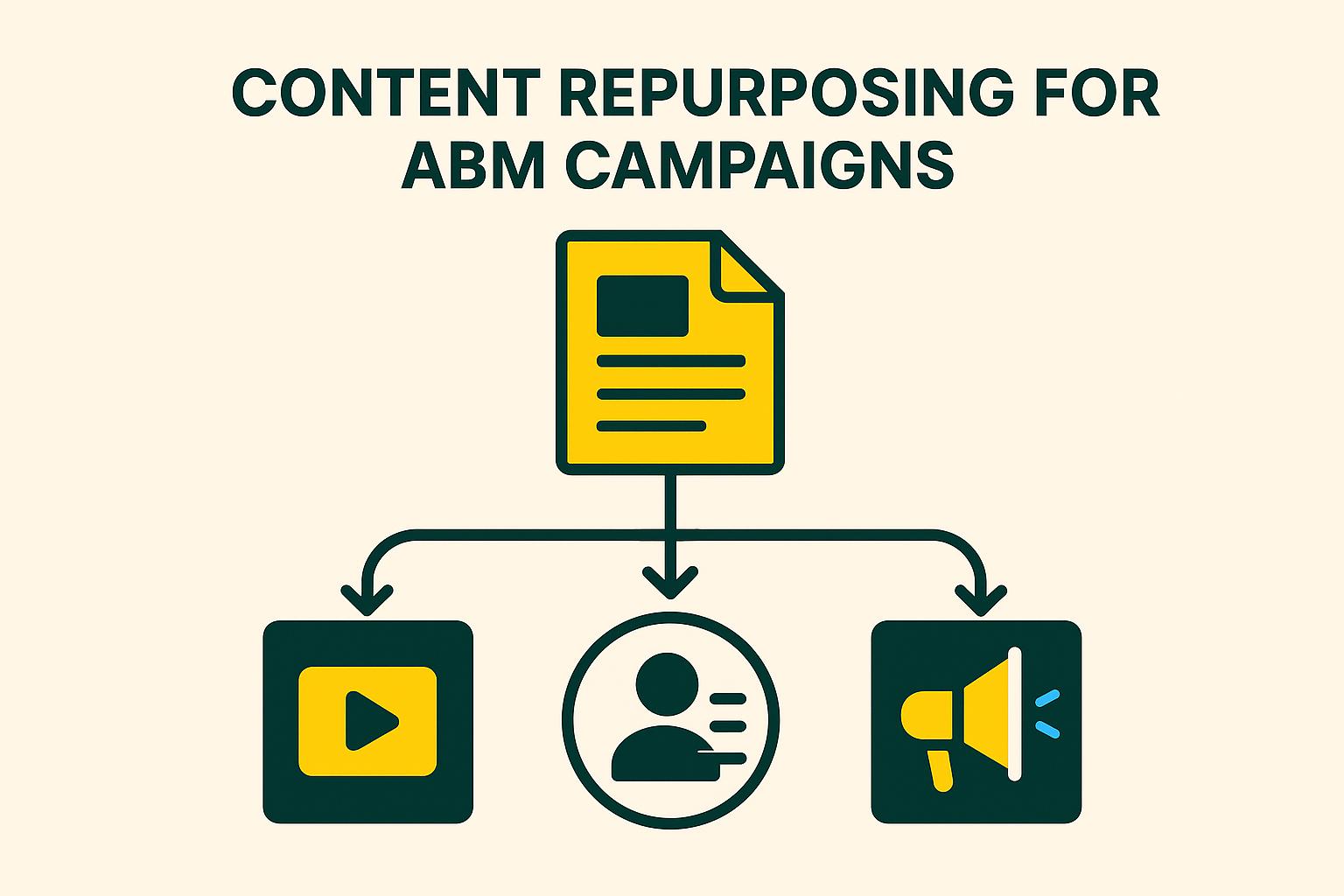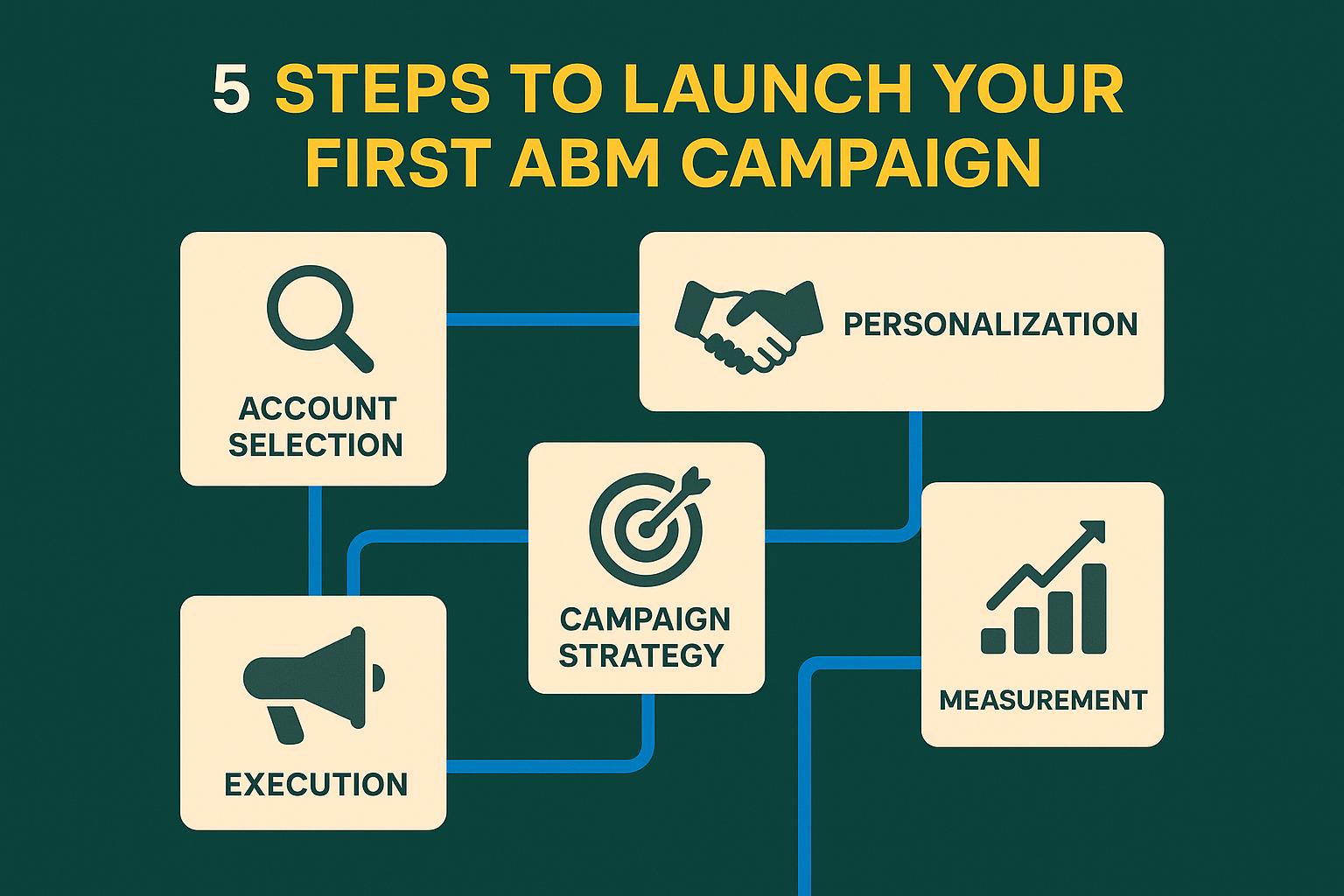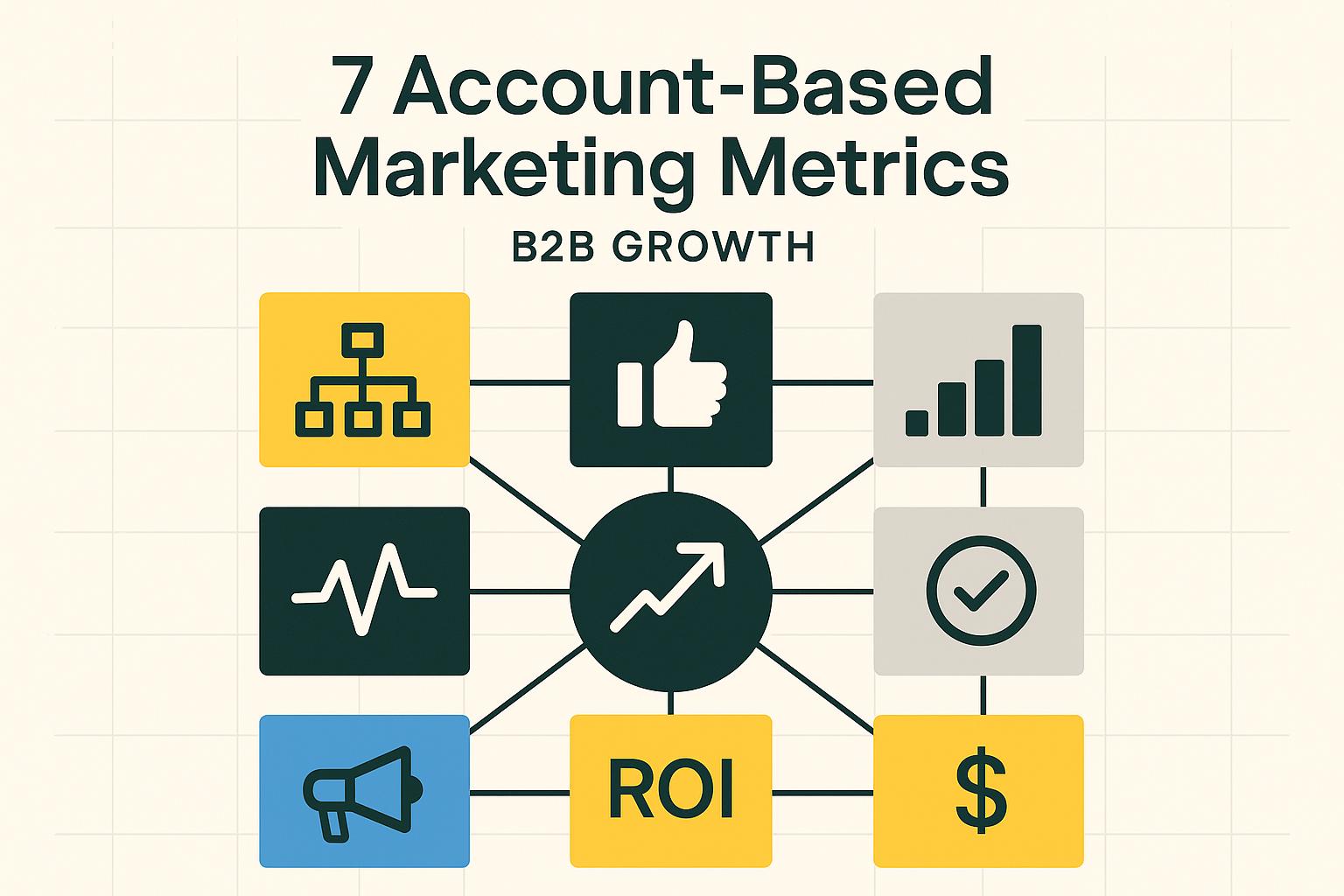


Want better results from your marketing? Make it personal with Account-Based Marketing (ABM).
Here's what you need to know:
- ABM targets key, high-value accounts rather than a wide crowd.
- Being personal counts: 93% of businesses see better ROI with ABM. Things like custom emails and detailed case studies about certain jobs get people more involved.
- Pick the right accounts by using info from your CRM and clues from their intents. Group accounts in levels (like, Level 1: 10-50 accounts, Level 2: 50-500 accounts) to use resources well.
- Make sales and marketing teams work together to share ideas and keep messages the same. This teamwork can lift income by 32% on average.
- Personalized content helps: Emails made for one person have an open rate that is 29% higher and get 41% more clicks.
- Use changing content (such as personalized web pages) and fun tools (like, ROI calculators) to grab prospects at each buying step.
- Check how you're doing: Keep an eye on how people are interacting, the rates at which they convert, and your ROI to tweak your approach over time.
Main point: Making content in ABM personal boosts involvement, makes sales quicker, and brings better ROI. Focus on the right accounts, make content just for them, and make sure sales and marketing join forces for top results.
How B2B Marketers are Personalizing ABM Content Experience
Getting Data and Grouping Accounts
The need for good data and correctly grouped accounts is key for doing well in ABM (Account-Based Marketing) in a way that feels personal. The numbers show - 39% of B2B marketers say figuring out which accounts to aim at is one of their top ABM struggles [4].
Yet, the payoffs for doing it right stand out. Companies that use a leveled ABM plan see a 32% rise in the money marketing brings in and a 41% increase in marketing ROI versus the usual ways of making demand [7].
Picking Target Accounts
To spot the right accounts, you need strong data to shape each possible customer. Your Ideal Customer Profile (ICP) should have firm details, tech details, budget points, and where they are [3][4]. The true win is when you add behavior and goal data.
Data from your own tools like your CRM or website checks can show which accounts are already into your brand. For example, you may watch who checks your blog, gets your whitepapers, or joins your webinars [3]. Goal data goes deeper, showing accounts that are actively looking for solutions like yours - even if they haven't hit your site yet [3].
Here’s a clear case: A big healthcare provider might show many goal signs - maybe the CTO gets your security whitepaper, the IT Head takes integration details, and the Buying team views your price page. This account clearly needs fast, personal contact [3]. On the flip side, a mid-sized fintech firm with just the Operations Head engaging with a blog or webinar might need more help with content made for their field [3]. Meanwhile, a SaaS company that fits your ICP but only shows hits now and then might need more general awareness efforts till their interest is clearer [3].
Grouping Accounts by Levels
After collecting the data, the next move is to split accounts into groups based on how much time and stuff they need. Strong ABM plans often use a three-level system to keep personal touch while being smart with resources.
| Level | Number of Accounts | Custom Type | Money Use |
|---|---|---|---|
| Level 1 (Key) | 10–50 accounts | Each one unique (1:1) | 40–50% of funds |
| Level 2 (Main) | 50–500 accounts | Group style (1:Few) | 30–40% of funds |
| Level 3 (Broad) | 500+ accounts | By job/field (1:Many) | 10–30% of funds |
Tier 1 accounts are the key ones. They are high-value with a great fit and big potential to make money. These accounts get the most help and very tailor-made plans [6].
Tier 2 accounts are good but don’t need as much focus. They do well with strong, careful plans and active talking, using fewer resources than Tier 1 [6].
Tier 3 accounts fit the profile but might make less money or need more checks. Work with these is often set on autopilot and made for handling many at once [6].
This method of sorting works well. For example, one-on-one ABM pushes can win 35-40% of the time, a lot better than the 5-10% for usual demands [7]. Take SundaySky; they saw a jump of 220% in how often people said yes, along with better talks and quicker deals, after using smart data to split accounts [8].
It’s key to let accounts shift levels as they show more or less interest [6]. For example, an account that shows more want can go from Tier 3 to Tier 2, or one less active might go down a level.
Working with Sales Teams
To split groups right, sales and marketing must work together. Sales knows the people and the history, while marketing knows about how they interact and what they might want.
"You can actually define your accounts in partnership with your sales team. By doing this, we can map out relationship density, potential deal size, intent models based on deal stage, and also client references in this space." - Olivia Cain, Senior Content Manager for LinkedIn Marketing Solutions [5]
To make this team up work, set clear ways to share info on accounts. Marketing needs to give data on engagement and intent, while sales brings in what they learn from talking directly. Often meeting to talk about account news and how campaigns are doing can lead to plans you can use.
Adobe shows well how this team up works. After they used an ABM plan, Adobe's deals grew by 161%, all by joining up and using LinkedIn and Sales Navigator to send the right words to the right people at all stages.
Genesys also cut the cost of leads by 30% by bringing sales and marketing together under one ABM plan. They used LinkedIn to talk to people and tried the plan on a small scale before making it bigger.
The key to winning is having tools that let both teams see into how accounts are doing and how campaigns are going. A one big data system that pulls in info from many places - and checks the data often - makes sure everything is right. With the same goals and ways to measure, sales and marketing can work as one team that drives money. This team up is very important as 57% of ABM marketers look at 1,000 accounts or fewer.
Making Content Fit Each Customer's Needs
After you sort out different groups of buyers and bring your sales team together, the next move is to make a plan for content that really fits what each buyer needs. You want to give them the right content at the right time. This means you make content that fits well, is made just for them, and has messages that work together.
Gartner says that when B2B companies make things more personal, they sell better stuff by 9% and please 71% of buyers who like when experiences feel special to them. This kind of personal touch makes 80% of customers more likely to buy.
Putting Content Right Where It Fits
Each group of buyers needs a different touch of personal stuff, and it's key to hit the things they really care about. Here's how it might look:
- A CIO will want to know about keeping things safe and how things work together.
- A CFO looks mostly at the money - things like return and saving costs.
- A CMO cares a lot about how customers feel and how the business grows.
UserGems shows a smart way to do this with ads that change to show the buyer's business name and use stories that matter to them. This plan doesn't just use their name - it also uses real success tales that the buyer would care about.
"The main thing with ABM is you're still answering questions at each stage. You are answering questions that they have in their heads that they're not willing to ask." - Isaac Ware, Director of Demand Generation at UserGems[12]
It's key to match content with the buying stage of the account. Studies by Forrester show that about 90% of tech leaders like vendors who give good content throughout the buying steps[13]. For instance:
- Early accounts need help that makes their problems clear.
- Mid-level accounts do well with comparing solutions.
- Late accounts want real proof like case studies and guides.
The MUBRIPE plan can help here. It has steps like:
- Mapping buying groups
- Understanding money potential
- Building a company map
- Researching key goals
- Identifying key links
- Publishing account info
- Engaging team talks[9]
This plan makes sure you know who needs which content and when.
Making Content Fit
People like different types of content. Some want long papers, others like short videos, and many like hands-on demos to really get the idea. Mixing up content types helps touch every key person in your target groups.
Note that 75% of B2B buyers use social media to help with their buying choices[12]. So, having content on many channels is very important.
Take Salesforce as an example; they use case studies for success stories, provide top-level briefs, and give interactive ROI tools for different needs[12]. Mutiny uses special pages set for certain roles, like tech details for CTOs and business facts for CEOs.
Here is how content varies by account type:
| Account Level | Main Content Types | How it Fits You |
|---|---|---|
| Level 1 | Made-for-you case studies, top-level briefings, personal ROI models, direct demos | Very made-to-fit, for your company's own needs |
| Level 2 | Papers focused on your field, emails for your job type, web events for you | Made to suit your work area and job |
| Level 3 | Big idea articles, learning blog posts, set email paths | Fits well in general, split into groups |
To grow this way, the 10-80-10 rule is good: make the start 10% of your stuff yours (like the first part), use a set plan for the main 80%, and change the last 10% with clear steps or asks to do something.
Making Marketing and Sales Say the Same
Once you sort your accounts and plan your content, it is key to make sure that marketing and sales say the same thing. When they don't, it costs a lot - 90% of sales and marketing folk say they see gaps in their company’s plan, style, way of work, and content use.
Talk often. Monthly sit-downs where marketing tells about what stuff did well and sales tells what clicks with people can make your plan better.
"If you don't have marketing and sales aligned and using the same set of data, then you're not really doing ABM." - Liam Doyle, SVP of Product Management, Salesforce[11]
To make things fit better, create simple outreach templates that speak to buyer types and their main problems. Let the sales team add their own special touch. Businesses that make sales and marketing work well together are 67% better at closing deals and 58% better at keeping customers.
Also, teaching new sales team members can help them see how marketing helps them and get them used to good content. Keeping sales updated about new content lets their ideas shape materials that appeal to future customers.
Lastly, set clear goals to check success. These could include things like how much buyers interact, how good sales talks are, and how buyers move through the buying steps. With everyone aiming for the same targets, your ABM plan will work much better.
Making and Fitting Content
When your content plan is ready, the next move is to put those plans to work. This means making content that not just grabs the eye but also leads target groups through the buying steps.
Making Content Fit for Different Levels
Not all groups are the same, and your content shouldn't be either. The way you change content should match the worth and chance of each group level.
Level 1 groups need full change. These top need folks should get content that meets their own work needs. For instance, Snowflake saw an 87% rise in deals by creating special video content for its top groups[10]. For them, think about using very tailored items like case stories with their company name, ROI tools for their own numbers, or even content that talks about new wins or news in their field.
Level 2 groups get help from content made for their type of work. Focus on the ups and downs of their area. For example, if you aim at health groups, make tools that talk about things like HIPAA rules, keeping patient info safe, or how to do better in clinical spots.
Level 3 groups need content changed for different jobs in the group. Change your words for special roles like CFOs, CTOs, or heads of marketing. A piece for a CFO might show ways to save money and ROI, while content for a CTO might go into tech parts and how things work together.
"I've found there's a 'sweet spot' for the amount of personalization in ABM. In practice, it can become inefficient to over-personalize messages to accounts with low or no probability to buy and to under-personalize accounts with a high probability to buy. That's why tiering accounts is so important in ABM." - Joe Kevens, Founder of B2B SaaS Reviews and Director of Demand Generation at PartnerStack[1]
The data shows it clearly. 93% of companies see more sales when they use personalized ABM content[2], and 75% of bosses like content that talks about their problems[10]. Plus, 85% of marketers think personalization in ABM makes relationships better[2]. Once you have content for each group, smart moves can keep your readers into it.
Using Live and Hands-on Content
Live and hands-on content lifts personalization up, making it bigger and stronger. By changing content based on what users do and their past actions, you can give them stuff that matters without needing lots of different pieces.
Website personalization stands out in ABM. When a person from a key group checks your webpage, live content can show them case studies, good words, or fixes that meet their needs. This makes their visit smooth and keeps them interested.
Email personalization does more than just put a name at the start. For example, Salesforce uses CRM data to send info and tips made for each person. Their focused emails got 14.31% more opens and 101% more clicks than general ones[15].
Interactive content, like quizzes, calculators, and tests, is also really strong. These types not only pull people in but also help you see what they need. For instance, an ROI calculator that uses their business numbers can make their visit feel just for them while showing your product’s worth. Trigger actions can make this even better - if someone gets a report, you can send them more like it or invite them to a talk, keeping things on track.
"Personalized content is the key to unlocking meaningful engagement in the world of ABM. By crafting tailored messages, leveraging dynamic content, and using data-driven insights, you're creating an experience that accounts won't forget." - Rajesh Menon, CEO of Impact Digital[14]
Having clean and well-set data from your CRM and marketing tools is key for good dynamic content. Keeping an eye on how people engage and what they like helps you tweak your strategy and stay on point.
Landing pages just for each account are a real game-changer. These pages can show the prospect's logo, use words that fit their industry, show case studies that matter to them, and have calls-to-action that meet their needs.
It's key to note that 83% of marketers say they get more engagement from personalized ABM content[2]. Dynamic content also keeps the same feel across different platforms, so when people see your emails, social media, or website, they get a message that fits what they've shown interest in before and what they need now.
sbb-itb-7f1e12d
Sending, Checking, and Making it Better
When you've made your focused message, you must next get it out and keep checking how well it works. The key is to reach your people via the best ways and improve based on what the data tells you.
Sharing Content Through Many Ways
To send out content right, get to your main accounts where they stay active. While a big share of marketers think that ABM boosts how much a customer is worth, this is only true if you hit them on their liked channels.
First, look up what your key accounts use online. For example, top bosses might like LinkedIn and emails, while tech teams may use forums more. Forrester shows that a lot of marketers feel that making content fit each person is key to ABM working well. You must line up your channel plan with how you make your content feel just for them.
Using lots of channels keeps you connected on various places like email, social networks, and sites. By using lists of target accounts across these, you make one smooth run.
Here's an actual case: A business focusing on big clients ran a three-part drive with a custom LinkedIn clip, a branded gift with a special web page, and an invite to a later group talk. What happened? They got a 33% rate of people getting involved and finished a deal within three months.
Mail sent to homes can up your count of new folks by 40%. Mixing real mail like letters with online reaching out really sticks in minds and hits hard.
Good time and working together matter. Your sharing of content must stay the same through all ways, so when a person gets your email, sees your ad on LinkedIn, and gets a letter, it links together well. Once sharing is set, you next check how good it is.
Checking How Well It's Going and Outcome
After you send your stuff, you need to check how good it connects. Usual steps like how many open emails or click links don't dig deep enough in ABM. Instead, look more at how well you hold your main accounts.
Scoring how much accounts are into it gives a better view than just one person's actions. This way thinks about things like opening emails, visiting sites, getting stuff, and being active on social media to give a total score. Accounts with high scores are way more likely to turn into chances.
Businesses with strong ABM often see big wins in money. Also, those with solid ways to check are way more likely to hit their ABM plans. Working out ROI for ABM goes past just cost-per-lead. By looking at all money made against costs, the best ABM tries often see a big 7:1 return.
Take these wins: Qualtrics saw that more than half their accounts didn't fit right. By moving their LinkedIn ad money to better-fit accounts, they got way better results in their campaign, pushed up their possible value, and grew their pipeline hugely while cutting down costs by a lot.
Just like Snowflake, which ran set campaigns from 30 main accounts using ads, emails, signatures, and web pages. They hit all 1,500 target accounts, noted 300 key ones leading 50% of content use, upped email clicks by 14%, and got a top account with no past talks.
To check success, look at things like how often accounts join in, how leads become part of an account, how chances turn to wins, win rates, how fast deals move, how much value customers give over time, and total ROI. Tools like CRM and marketing automation help keep an eye on these moves and follow them through the sales path.
Making Things Better From Results
Data is good if it leads to acts. The best ABM tries keep changing from what the data says. Tailored stuff gets 72% more play when you fix plans with data.
Set up talks often to find what does well and what needs to be fixed. If video beats text for top accounts, make more videos for these key groups.
A/B tests are key too, for small, big-value groups. Try out different email heads, content types, and action prompts for parts of your target accounts. Even small changes can make big wins when you're after key accounts.
Here’s how firms see gains: Brex tracked demos each week and raised them by 40%. Gorgias pushed up good deals each month by 55%, while Ramp saw a 70% rise in good replies from target accounts.
Use data tools to see trends in how users act, what they like, and how they join in. Look for hints, like which job areas like what content, when emails are opened most, or which social sites bring the most from target accounts.
Lastly, don't ignore what sales teams say. Meet often between marketing and sales to make sure your content plan helps real talks, boosting your ABM work more.
How LaviPrime Helps with ABM Personalization
LaviPrime goes all in on account-based marketing (ABM) personalization, focusing on real work rather than just giving out plans. Under Amit Lavi's lead, the team puts doing first, making sure ideas turn into real-world results.
A key part of how LaviPrime works is fitting account groups to each client's special chances. By looking at old data and knowing how clients work, they make groups that give lots of personal care to top accounts, less to the next, and even less to the last. This makes sure they use their resources well.
The bond between sales and marketing is key to LaviPrime's way. Firms with good team-up here grow 24% faster and make 27% more money in three years. Amit Lavi helps blend ABM plans with sales work, giving help to make sure plans really get done, not just talked about. This link makes sure that ideas are more than just plans - they really happen.
"When we were struggling, he quickly figured out what was wrong and set up a practical plan to fix it. But what really set him apart was how he made sure that plan worked with our sales team. He didn't just leave us with a plan; he was there every step of the way to make sure it was implemented right."
- Yifat Mor, VP Marketing
LaviPrime uses a smart form of ABM that learns from past work. They check what has worked or not for each client. They use this info to help companies aim at the right people, moving away from broad marketing moves.
They also make tech tools better to help with ABM work. By making custom guides, they cut down on unused tool costs and make sure teams can do their tasks well and fast. This way, they lower costs and speed up campaigns.
What makes LaviPrime stand out is how involved they stay. They don't just give advice and leave. They keep working with clients every week, tweaking campaigns and helping both marketing and sales people work as one. This way helps grow teams for a long time and shows clear results.
They also put a lot of effort into training teams. They don't just set up systems; they teach client teams how to keep and improve those systems as time goes on.
"Collaborating with Amit during my time as VP of Marketing at Mobideo was a real game-changer. For over two years, we tackled essential marketing elements like Demand Generation, LinkedIn advertising, HubSpot operations, and social media management. Amit is the B2B marketing expert you wish you had on speed dial."
- Maya Dror Melamed, VP Marketing
Conclusion and Key Takeaways
Making content for ABM fit each buyer changes how well B2B works for the better. In fact, 97% of leaders in ABM say they see more money back, and 83% of marketers find they reach people better when they fit their ABM plans to each account.
The key parts of making ABM content fit are: plan, do, and keep improving. It begins with finding the right info and sorting accounts well. Next, putting accounts in groups and working with sales teams make sure your content hits the mark. Studies even show that teams working together can boost sales and seal more deals. This teamwork paves the way for content that hits hard and right on target.
When done right, making and giving out content that fits each buyer can raise how much you sell by 20%. But Joe Kevens from PartnerStack points out that there’s a need to find a good middle point in how much you make it fit:
"I've found there's a 'sweet spot' for the amount of personalization in ABM. In practice, it can become inefficient to over-personalize messages to accounts with low or no probability to buy and to under-personalize accounts with a high probability to buy. That's why tiering accounts is so important in ABM."
To keep doing well, you must always get better. Use live data to tweak your way and make sure your work fits what people want. Often check how much people are into your stuff, how many are buying, and if you are making money. Also, do A/B tests to make your plan sharp based on what you learn [16].
We should note that making things personal is not just good to have - it’s needed. Sixty-six out of a hundred people look for brands to know them well, and 77 out of a hundred B2B buyers say their last buy was very hard [1].
FAQs
How do I pick and rank target accounts for ABM to get the best ROI?
To well pick and rank target accounts for Account-Based Marketing (ABM), start by looking at those that hold the most chance for big revenue and fit your business goals. Key points to think over are company size, industry, and their chance for solid growth or keeping them long-term.
Use intent data and account fit rules to make your list better. This makes sure you are looking at accounts that fit your ideal customer model and show strong signs they might buy. Put top focus on accounts that not only line up with your big aims but also offer the best chance of real ROI. This focused plan lets you put your resources into the chances that matter most.
How can I make my sales and marketing teams work well for a top ABM plan?
To bring your sales and marketing teams together for a great ABM plan, start with a shared dream and set clear goals. When both teams agree on main measures - like key accounts, step of leads, and money targets - it makes sure they work as one and aim for the same things.
Talking a lot is also key. Hold meetings often to see how things are going, share thoughts, and make better plans. It's important that both teams talk freely - everyone should have a say in picking accounts and making campaign plans. When they work as one, your ABM plans are more likely to hit the mark you want.