

ABM and Revenue Attribution: How They Work Together

Struggling to connect your marketing efforts to revenue? You’re not alone.
72% of B2B marketers can’t identify which touchpoints drive revenue. But combining Account-Based Marketing (ABM) with Revenue Attribution can solve this problem. Here’s how:
- ABM targets high-value accounts with personalized campaigns.
- Revenue Attribution tracks which activities contribute to revenue.
- Together, they provide clear ROI insights, align sales and marketing teams, and optimize budgets.
For example, tracking touchpoints like LinkedIn ads, whitepaper downloads, or sales demos helps pinpoint what works. Companies using this approach report a 60% higher conversion rate and shorten sales cycles significantly.
Key Takeaways:
- Align sales and marketing with shared data.
- Use attribution models to track multi-stakeholder journeys.
- Focus on metrics like pipeline velocity and account-level ROI.
Generating more revenue from digital demand generation and ABM.
1. Account-Based Marketing (ABM)
Account-Based Marketing (ABM) takes a different approach from traditional lead generation by focusing on high-value accounts. When paired with revenue attribution, it creates a direct link between interactions and revenue outcomes.
Strategic Alignment
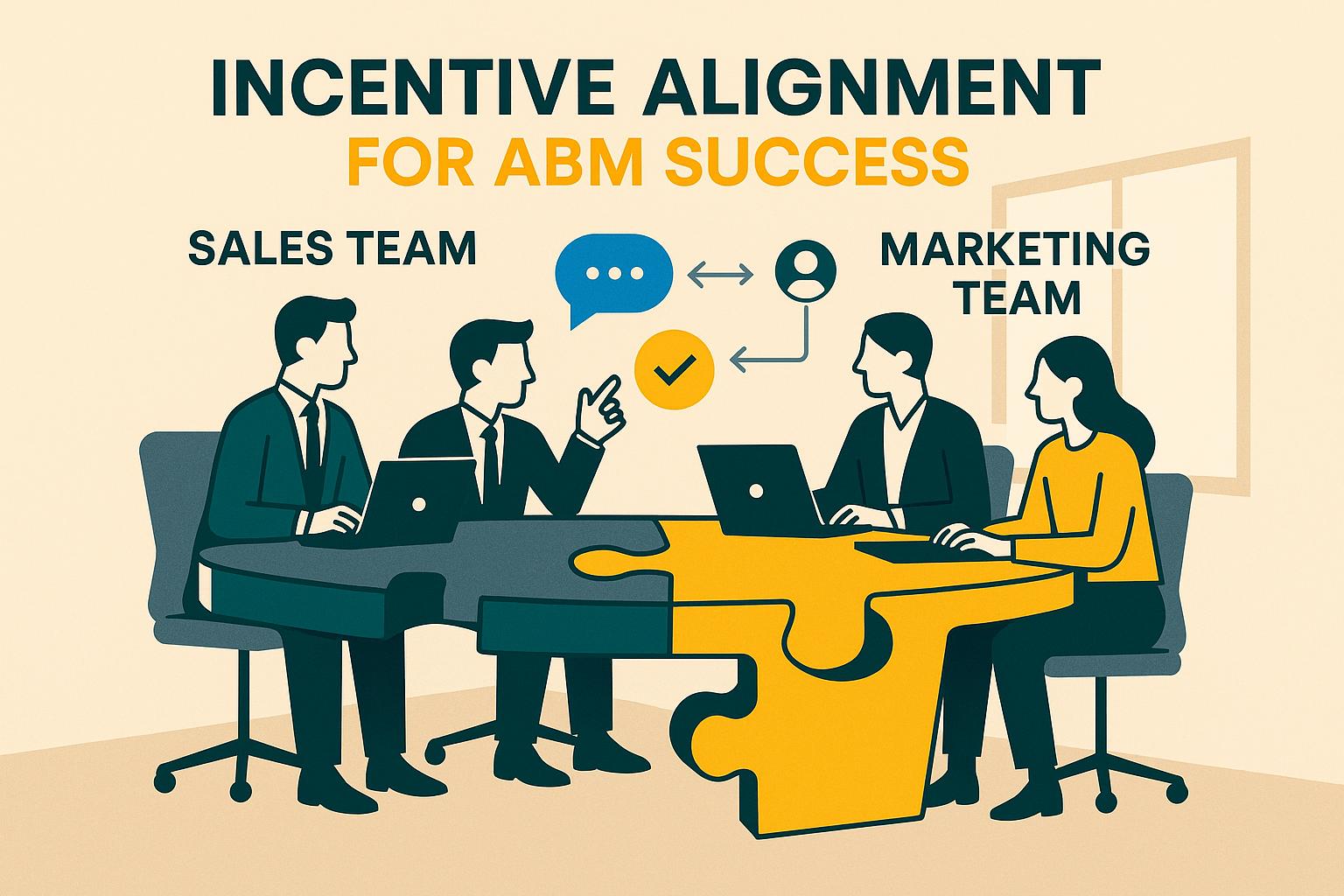
The success of ABM starts with strong collaboration between marketing and sales teams. Companies that align these departments effectively are 103% more likely to exceed their goals and experience a 32% increase in revenue [6]. This alignment becomes even more critical when implementing revenue attribution, as both teams need to rely on the same set of data and metrics.
ABM attribution provides a shared, data-driven framework for both teams, offering a centralized view of how target accounts progress. Instead of working in isolation, marketing and sales gain full visibility into how their combined efforts impact accounts throughout the buyer's journey. By mapping account data to this journey, businesses can track multiple stakeholders and their interactions, ensuring attribution models reflect the complexity of B2B decision-making. This approach enables more precise revenue tracking.
Revenue Insights
Integrating ABM with revenue attribution offers detailed insights into the factors driving business growth. ABM attribution connects marketing and sales activities to revenue at the account level, capturing both digital and offline interactions across multiple stakeholders [1].
For instance, a B2B SaaS company used ABX campaigns, including personalized emails, LinkedIn ads, and content tracking, to monitor every touchpoint. They attributed revenue proportionally: 40% to LinkedIn ads, 30% to a whitepaper downloaded by the CFO, and 30% to a personalized sales demo [1]. This breakdown helped the marketing team identify the most effective tactics for securing future enterprise deals.
Key metrics from this integration include account engagement scores, pipeline velocity, influenced pipeline value, and account-level conversion rates [1]. These insights go beyond traditional marketing data, helping teams understand which content, formats, and channels resonate most with specific buyer personas. Additionally, this data highlights underperforming campaigns and oversaturated channels, enabling marketing leaders to optimize budgets and justify additional resources. When executives see that ABM programs influence 60% of enterprise deal value, gaining internal support becomes much easier [1].
Implementation Challenges
While ABM offers transformative benefits, implementing it comes with challenges. One of the biggest hurdles is aligning sales and marketing efforts - 47% of organizations cite separate sales and marketing funnels as a primary cause of misalignment [6].
"If marketing and sales aren't speaking the same language, revenue growth becomes impossible." – Mark Roberge, Former CRO at HubSpot [6]
Data quality is another issue, with 29% of marketers struggling to access accurate data [6]. Fragmented systems and siloed data further complicate tracking engagement and optimizing campaigns. Additionally, creating a target account list can be tricky - 28% of marketers report this as a major challenge. Striking the right balance is key: casting too wide a net turns ABM into generic lead generation, while being too narrow risks missing lucrative opportunities.
"If you target too broad, your ABM strategy turns into just another lead-gen effort. Focus too narrow, and you might miss profitable opportunities." – April Dunford, Positioning Expert and SaaS Advisor [6]
Scaling content personalization also presents difficulties. Crafting hyper-personalized messaging while maintaining operational efficiency requires innovative tools and strategies.
Optimization Opportunities
Overcoming these challenges opens the door to significant improvements. Integrating ABM with revenue attribution allows for smarter campaign strategies. For example, using intent data to identify accounts actively researching solutions ensures that campaigns target prospects with genuine interest, rather than relying on static demographic information [1].
Companies that refine their ABM strategies often see impressive results. Snowflake, for example, increased SDR meeting completion rates by 2–4x, tripled event attendance, and cut deal cycles in half by leveraging intent data and AI-driven insights to identify high-value accounts [6]. They replaced manual account selection with an AI-powered system integrated directly into their CRM.
Process improvements also come from structured feedback loops and regular team meetings to review attribution data [1]. This collaboration helps teams fine-tune campaigns based on stakeholder preferences, such as prioritizing direct outreach for decision-makers and providing tailored content to key influencers.
At LaviPrime, we specialize in helping businesses tackle these challenges. Our ABM services ensure that attribution models enhance your account-based strategies, making them more effective and easier to manage.
2. Revenue Attribution Models
When it comes to Account-Based Marketing (ABM), revenue attribution models provide the tools to measure its impact effectively. These models turn ABM strategies into measurable revenue drivers by tracking the customer journey across various channels. This approach helps evaluate how well marketing activities contribute to revenue, making it easier to justify investments in ABM.
Strategic Alignment
Revenue attribution serves as a bridge between marketing efforts and business outcomes. With 90% of US sales and marketing teams reporting a disconnect between their departments [5], these models offer a shared framework and language that both teams can use to collaborate more effectively. By integrating marketing data into a customer relationship management (CRM) platform, both sales and marketing teams gain access to critical insights for making informed decisions [5].
Multi-touch attribution (MTA) plays a key role by tracking every interaction along the buyer's journey and assigning value to each touchpoint. Unlike single-touch models that credit one interaction with the entire conversion, MTA provides a detailed, data-driven view of how buyers engage at every stage. This comprehensive perspective ensures no part of the journey is overlooked, setting a solid foundation for better budget allocation and revenue insights [2].
Revenue Insights
One of the biggest advantages of revenue attribution models is the ability to pinpoint which marketing channels generate the most revenue and return on investment (ROI) [5]. This is especially useful in ABM, where 72% of B2B marketers struggle to identify the key touchpoints that drive revenue - particularly in multi-stakeholder environments [4].
Tracking the full journey, from initial awareness to final purchase, highlights the channels delivering the best ROI, allowing for smarter budget decisions [5]. For instance, in March 2025, a B2B SaaS company used multi-touch attribution to evaluate its LinkedIn and display ad campaigns. The analysis revealed that mid-funnel retargeting ads were outperforming top-of-funnel awareness campaigns. By reallocating 40% of its budget to retargeting, the company achieved a 38% decrease in cost per acquisition and shortened its sales cycle by two weeks. Setting measurable revenue goals for each channel can transform marketing from a cost center into a revenue generator [5].
Implementation Challenges
While multi-touch attribution offers valuable insights, implementing it alongside ABM strategies is no small feat. It’s considered one of the most complex tasks in marketing [8]. Challenges include navigating extended sales cycles, managing resource constraints, and addressing the complexities of multi-stakeholder buying groups [1]. B2B decisions often involve 5–10 stakeholders with varying priorities, and sales cycles can stretch from six months to over a year [1].
"All of the data connections have made attribution more robust, but it's harder to explain. Success can depend on how you're having a conversation, with whom, what their level of expertise is, and how it's framed."
- Andy Caron [8]
Fragmented systems also make it difficult to get a unified view of the customer journey. Adding to this, the rise of the "dark funnel" - where buyers rely on peer reviews, industry forums, and social media for research - creates blind spots in attribution models [1]. Resource limitations further complicate efforts; for example, 34% of UK marketers cite internal skills gaps and limited resources as major hurdles in executing ABM strategies [7].
Optimization Opportunities
Despite these obstacles, there are ways to improve revenue attribution models for ABM success. Start small by launching a pilot program with a few high-priority accounts to test and refine your tools [1]. Enhancing data quality - through consistent naming conventions, standardized data fields, and clear data hygiene practices - can resolve many accuracy issues that often undermine attribution efforts [1]. Combining first-party and third-party intent data while mapping account information to the buyer's journey ensures more precise tracking.
Collaboration across teams is another essential step. Working closely with sales and customer success teams [1] and focusing on bottom-of-the-funnel data can yield actionable insights that directly impact revenue. Regular communication between departments allows for continuous refinement of attribution models, ensuring they stay aligned with real-world feedback and evolving market conditions.
At LaviPrime, we specialize in helping businesses tackle these challenges by implementing revenue attribution models that not only support ABM strategies but also remain practical and actionable for marketing teams. With optimized attribution models, companies can sharpen their marketing efforts and gain insights that directly contribute to revenue growth.
sbb-itb-7f1e12d
Pros and Cons
Combining Account-Based Marketing (ABM) with revenue attribution can fuel B2B growth, but it doesn't come without its hurdles. While this integration offers measurable returns and aligns strategies between teams, it also brings a level of complexity that can be tough to navigate. Let’s break down the benefits and challenges.
This approach directly ties revenue to specific marketing and sales activities at the account level, delivering a clearer picture of ROI. It focuses efforts on high-priority accounts, maximizes campaign effectiveness by tailoring messages to buyer personas, and fosters collaboration between sales and marketing teams through shared metrics and centralized account management [1].
But here’s the catch: the challenges are just as impactful. Data quality is a recurring issue - 29% of marketers admit to struggling with accurate data for ABM efforts [6]. On top of that, over half (54%) feel overwhelmed by incorporating AI into their processes, and only 47% say they know how to measure its impact effectively [6].
| Aspect | Advantages | Disadvantages |
|---|---|---|
| Revenue Impact | 87% report better ROI compared to other strategies | 72% of marketers struggle to pinpoint revenue touchpoints due to complex attribution |
| Team Alignment | Encourages shared metrics and centralized views | Misalignment persists without strong communication frameworks |
| Data Quality | Provides account-level insights and journey mapping | 29% face data accuracy issues; fragmented systems create blind spots |
| Resource Requirements | Prioritizes high-value accounts for better ROI | Demands significant resources, skilled staff, and ongoing tech integration |
| Implementation | Yields measurable business outcomes | Requires complex setup, lengthy sales cycles, and navigating "dark funnel" challenges |
Beyond the stats, the real-world application of these strategies reveals just how challenging implementation can be. It involves juggling multi-channel tracking, integrating data from various sources, choosing the right attribution models, and managing resource limitations [1]. Even foundational tasks, like building a target account list, can be daunting - 28% of marketers cite this as a major roadblock in ABM [6].
However, when sales and marketing teams are aligned, the results can be game-changing. Companies with strong alignment are 103% more likely to exceed their goals and can see a 32% boost in revenue [6]. For businesses looking to adopt this integration, the road may be bumpy, but the payoff is worth it. Success hinges on setting realistic expectations, investing in the right resources, and tackling foundational issues head-on.
Conclusion
Bringing together Account-Based Marketing (ABM) and revenue attribution is reshaping how B2B companies grow. When these two strategies are aligned, they deliver measurable outcomes that validate marketing investments and drive revenue. In fact, 77% of ABM users report revenue growth, highlighting the power of this approach[9].
The cornerstone of success lies in tracking every touchpoint across the buyer's journey. By creating a detailed view of how marketing and sales activities influence account-level decisions, businesses can concentrate their efforts on high-value accounts. This method not only optimizes resource allocation but also provides the insights needed to fine-tune campaigns and boost ROI. These insights lead directly to actionable strategies.
For companies ready to dive in, start with intent data to pinpoint high-value accounts and map their journey. Take it step by step, scaling as you go[1][3]. Focus on bottom-of-the-funnel metrics to identify the marketing activities that truly drive conversions. It’s also crucial to align your sales and marketing teams around shared metrics to ensure a seamless process.
The foundation of success is data-driven. Combining first-party data with third-party intent signals allows you to clearly map each stage of the buyer's journey[1]. But don’t be misled - technology alone isn’t the solution. True progress happens when sales and marketing teams work together, using shared KPIs and keeping data accurate.
This process requires determination and focus. While 72% of marketers struggle to pinpoint specific revenue touchpoints[4], those who invest in ABM attribution see impressive results. Companies using ABM report conversion rates 60% higher than those who don’t[10]. The key is to establish strong foundational processes, invest in the right tools, and foster open communication between teams. The challenges are real, but so are the rewards.
FAQs
How do Account-Based Marketing (ABM) and Revenue Attribution work together to align sales and marketing teams?
How ABM and Revenue Attribution Work Together
Account-Based Marketing (ABM) and Revenue Attribution are like two sides of the same coin, working together to align sales and marketing teams around shared goals. While ABM zeroes in on personalized engagement with high-value target accounts, revenue attribution pinpoints which marketing activities are driving the most revenue.
By combining these approaches, teams can focus their energy where it matters most, track success using shared KPIs, and fine-tune strategies for better results. This partnership minimizes miscommunication, promotes teamwork, and creates a clear path to predictable growth, making it easier to scale B2B marketing efforts effectively.
What challenges do businesses face when combining ABM with revenue attribution, and how can they address them?
When combining Account-Based Marketing (ABM) with revenue attribution, businesses often face hurdles such as:
- A disconnect between sales and marketing teams
- Limited staff or expertise to manage the process
- Challenges in choosing the right tools and metrics for success
To tackle these issues, it’s crucial to focus on collaboration across teams. Encourage open communication and establish shared objectives between sales and marketing to ensure everyone is on the same page. Using advanced attribution models, like multi-touch attribution, can give a clearer view of how ABM activities influence revenue. On top of that, refining your marketing technology stack allows for better tracking and analysis of account-level data, empowering smarter, data-driven decisions. With the proper approach and tools, aligning ABM with revenue attribution becomes a clear path to driving measurable results.
How do revenue attribution models support ABM strategies in measuring ROI and driving growth?
Revenue attribution models work hand-in-hand with Account-Based Marketing (ABM) by connecting revenue to specific marketing touchpoints. This connection gives businesses a clear view of their campaign ROI and highlights which strategies are delivering results.
By breaking down how various channels and tactics impact sales, these models enable marketers to refine their ABM strategies, allocate resources wisely, and concentrate on high-value accounts. This focused approach supports smarter decision-making and helps B2B companies achieve steady growth.