

Ultimate Guide to Automating Sales Funnels with Data

Want to close more deals and save time? Automating your sales funnel with data is the answer. Here's why:
- Modern buyers demand personalization. Data helps you deliver tailored messages exactly when prospects need them.
- Manual processes can't keep up. Buyers jump between stages unpredictably, and automation ensures you stay relevant.
- Data-driven insights improve performance. Behavioral and demographic data refine your targeting, boost conversions, and shorten sales cycles.
Key takeaways:
- Use data to track engagement, segment leads, and prioritize high-interest prospects.
- Automate workflows to adapt to real-time actions.
- Continuously optimize your funnel with performance data.
This approach isn't just about efficiency - it's about creating better customer experiences while driving growth.
How to Optimize Your Sales Funnel To Get More Customers
The 3 Stages of a Modern Sales Funnel
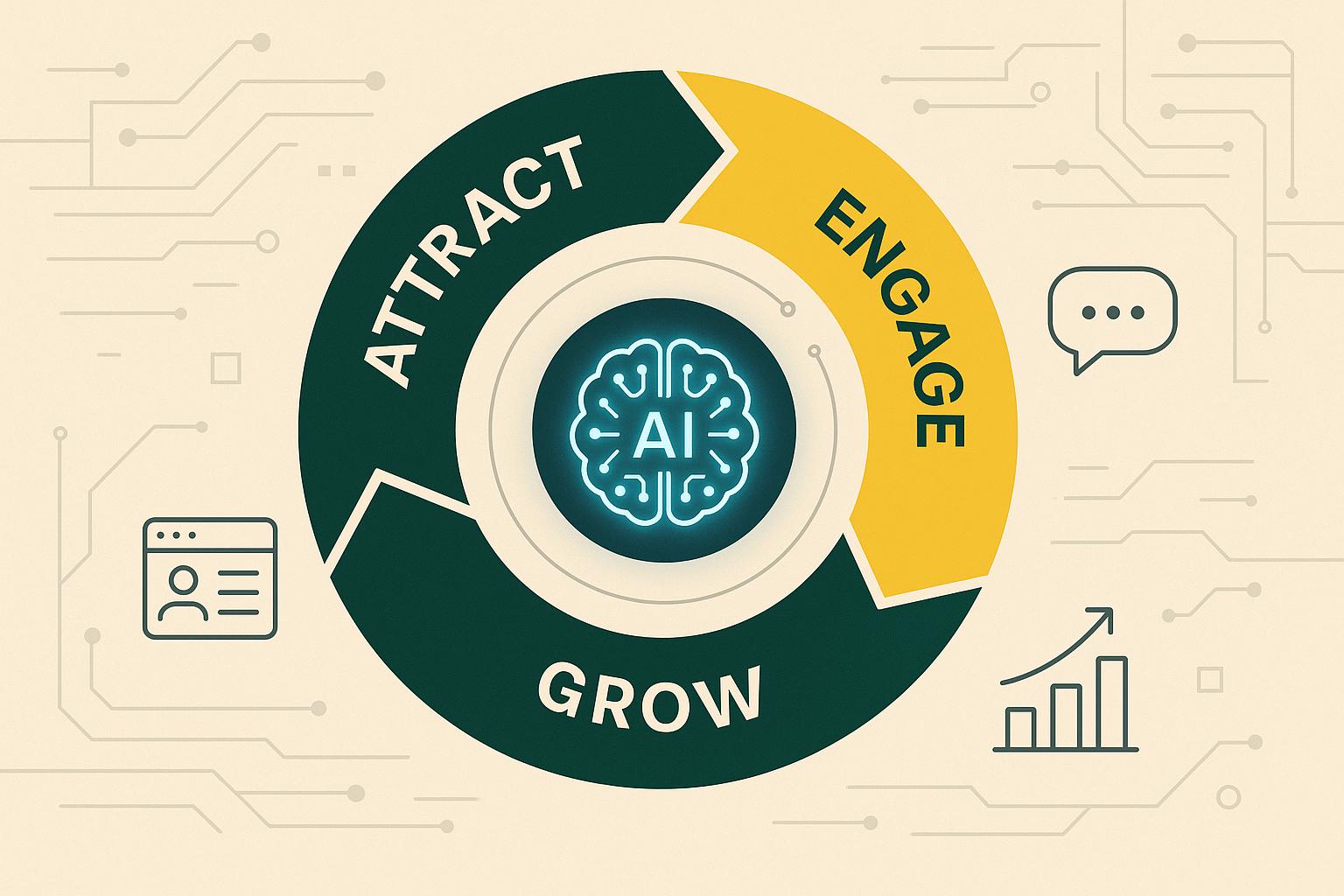
Modern B2B sales funnels thrive on data-driven automation, allowing prospects to move seamlessly between stages. Each stage plays a unique role in the buying journey, and understanding the specific data needed at each step is essential for creating effective automation. By aligning your strategies with these insights, you can deliver personalized experiences that match where prospects are in their decision-making process.
Awareness and Lead Generation
This stage is all about capturing early interest. It's when prospects first discover your brand and start recognizing a problem they need to address. Automation here focuses on identifying potential leads and differentiating genuine interest from casual browsing.
- Website analytics help you see where prospects spend their time. This data reveals which content draws the most attention and drives lead acquisition.
- Attribution tracking shows which channels bring in the best leads. For example, you might find that while one channel generates fewer leads, it produces higher-quality prospects. This allows you to shift resources toward channels that deliver better results.
- Form analytics provide a deeper look into lead quality. Prospects willing to fill out longer forms or share detailed information about their business often indicate higher intent. Gradually collecting more data as they engage with your content can help you qualify them further.
- Content consumption patterns are another strong indicator. Leads who download multiple resources, attend webinars, or spend time on pricing pages show a higher level of interest compared to those who only skim a blog post.
Consideration and Lead Nurturing
Once prospects start evaluating their options, the focus shifts to nurturing their interest with tailored interactions. At this stage, behavioral and intent data become critical for guiding them closer to a decision.
- Email engagement metrics - like open rates, click-through rates, and time spent reading - reveal what resonates with different segments. Use this data to customize follow-ups based on their interests.
- Content engagement scoring helps you prioritize leads. A prospect exploring technical documentation may have different needs than someone focused on ROI calculators or case studies. Adjust your outreach accordingly.
- Website return behavior signals growing interest. Repeated visits - especially to product or pricing pages - indicate readiness for more direct engagement, such as a demo or sales call.
- Social media activity adds another layer of insight. Prospects who interact with your LinkedIn posts or share your content show public interest, making them ideal candidates for personalized outreach.
- Time-based triggers let you adapt to changing behaviors. For instance, if a prospect downloads a whitepaper but doesn't respond to follow-up emails, consider switching up your approach with video content or interactive tools.
The goal here is to keep your nurturing strategies flexible, ensuring your responses align with the prospect's demonstrated interests.
Decision and Post-Sale Engagement
As prospects approach the buying decision, the focus turns to conversion and building long-term relationships. This stage is where you refine your approach using detailed conversion data and insights into customer behavior.
- Sales data helps you understand what closes deals. Tracking interactions and analyzing contracts can reveal patterns to refine your sales process and improve conversion rates.
- Onboarding metrics play a big role in customer retention. Monitoring how quickly new customers complete setup, which features they use first, and any challenges they face can help you enhance the onboarding experience and reduce churn.
- Usage analytics from your product or service provide clues about customer health and potential upsell opportunities. For instance, customers actively using advanced features or exceeding usage thresholds may be ready for additional services.
- Support ticket analysis highlights common issues and areas for improvement. Identifying recurring questions or complaints can guide product development and help you create proactive support resources.
The data gathered during this stage not only boosts immediate conversions but also strengthens your overall sales funnel. By understanding what works at each step, you can continually attract, nurture, and convert prospects more effectively.
Data-Driven Sales Funnel Automation Strategies
Taking the funnel stages we’ve discussed to the next level means diving into advanced automation powered by data insights. It’s not just about knowing your funnel but aligning your data flow to fuel automation. This approach allows for smarter segmentation and real-time scoring, turning rigid funnels into adaptive systems that cater to each prospect’s journey.
How to Define and Segment Target Audiences
Effective audience segmentation goes beyond basic demographics. By combining firmographic data with behavioral insights, you can create precise, actionable segments that truly engage your prospects.
Start by analyzing your current customer base. Look for patterns in factors like company size, industry, technology use, and buying habits. For example, companies that close deals quickly might share traits like using specific software or having decision-makers in certain roles. Behavioral data adds another layer - track how prospects interact with your content. A prospect downloading technical resources and reading implementation guides has different needs than one focused on ROI calculators and case studies. These behaviors should guide tailored automation.
Don’t overlook geographic and timing data. Prospects in different regions may have unique budget cycles or compliance needs. Similarly, someone researching in Q4 might be planning for the next year, while Q2 activity could signal immediate interest.
Finally, make your segments dynamic. As prospects move through the funnel, their segmentation should update automatically. For instance, a prospect who shifts from consuming educational content to downloading a pricing guide should transition to a decision-stage segment without manual intervention.
Using Predictive Analytics for Lead Scoring
Predictive lead scoring changes the game by using historical data to predict future actions. Unlike traditional scoring, which relies on fixed criteria, predictive models analyze past sales data to identify patterns that lead to conversions.
These models pull from diverse data sources - email engagement, website visits, social media activity, and even signals of company growth. They can uncover subtle trends, such as how specific sequences of interactions correlate with faster deal closures.
To get started, you’ll need clean, detailed historical data. Ideally, this includes 12–18 months of sales information covering both successful and unsuccessful leads. Include touchpoints like email clicks, content downloads, demo requests, and sales conversations. Missing data can weaken the accuracy of your models.
Don’t stop at the data - sales teams often have valuable insights about lead quality that might not be obvious in the numbers. Regularly incorporate their feedback to refine your scoring model and identify new patterns.
Also, factor in negative indicators. For instance, leads that ignore emails, haven’t visited your site recently, or belong to financially struggling companies should see their scores drop. This helps your sales team focus on higher-potential prospects.
Creating Personalized Lead Nurturing Campaigns
Personalization is all about delivering the right message at the right time to the right person. Data-driven nurturing campaigns use automation to process multiple data points and tailor content accordingly.
Start by mapping your content to buyer personas and funnel stages. A technical decision-maker will need detailed implementation guides, while a financial stakeholder might prioritize ROI-focused content. Your automation should recognize these differences and serve the appropriate materials.
Timing is equally important. Use engagement data to pinpoint when prospects are most likely to respond. Some might prefer immediate follow-ups, while others engage better with a weekly digest or through platforms like LinkedIn. Match your outreach to their habits for maximum impact.
Content sequencing should adapt based on responses. For instance, if a prospect downloads a technical whitepaper but skips case studies, follow up with more technical resources. On the other hand, someone engaging with customer success stories might respond better to testimonials and social proof.
Consistency across channels is key. Coordinate email, social media, personalized website content, and sales outreach to ensure a unified message. For example, if a prospect receives an email on a specific topic, your website could highlight related content, and your sales team should be updated on their activity.
Progressive profiling is another smart tactic. Instead of overwhelming prospects with long forms, gather small bits of information over time. This keeps engagement high while enriching your database gradually.
Lastly, external triggers can enhance your campaigns. Events like company funding announcements, leadership changes, or new technology adoption offer opportunities for timely, relevant outreach.
If you’re ready to implement these strategies, working with experts can make all the difference. At LaviPrime, we specialize in helping B2B businesses integrate data-driven sales funnel automation seamlessly, setting the stage for scalable growth.
sbb-itb-7f1e12d
Tools and Technologies for Sales Funnel Automation
Even the best strategies can falter without the right tech stack. The secret lies in choosing tools that excel at specific tasks and work together seamlessly to create a system that evolves with your business. Here's a closer look at the essential technologies driving sales funnel automation.
Core Technologies for Automation
Customer Relationship Management (CRM) platforms serve as the backbone of your sales data. For example, HubSpot offers a user-friendly CRM with powerful automation features to track every interaction with prospects. Salesforce provides highly customizable solutions and advanced predictive analytics, though it comes with a steeper learning curve. Microsoft Dynamics 365 is a great fit for businesses already integrated into the Microsoft ecosystem.
Marketing automation platforms simplify nurturing campaigns and lead scoring. Marketo shines in managing complex, multi-touch campaigns, making it ideal for B2B companies with longer sales cycles. Pardot, now part of Salesforce, pairs seamlessly with Salesforce CRM and offers strong email marketing capabilities.
Analytics and data platforms provide insights that guide automation strategies. Google Analytics 4 tracks website behavior and conversion paths, while Mixpanel and Amplitude focus on detailed event tracking to understand user actions. For B2B companies, tools like 6sense and Demandbase offer account-level insights and intent data, helping identify when businesses are actively researching solutions.
Email marketing platforms remain a cornerstone for nurturing campaigns. Mailchimp is a solid choice for smaller businesses with simple needs, while Constant Contact and Campaign Monitor provide more advanced segmentation options. For larger enterprises, Eloqua offers detailed reporting and sophisticated automation workflows.
Lead intelligence tools enhance your data with valuable context. ZoomInfo and Apollo, for instance, offer vast, auto-updating contact databases that include insights into company growth, technology usage, and recent news - perfect for tailoring outreach efforts.
Communication and engagement platforms ensure consistent interactions across multiple channels. Tools like Intercom and Drift enable real-time, automated chat conversations to qualify leads. LinkedIn Sales Navigator adds social selling capabilities and helps identify warm introductions.
How to Choose the Right Tools for Your Business
To build a tech stack that aligns with your sales funnel strategy, you need to evaluate your current processes, team capabilities, and future goals. Start by auditing your existing tools to eliminate redundancies and identify gaps. Many companies waste money on overlapping tools or systems that don't integrate well.
Consider total costs. Subscription fees are just the beginning - setup, training, and maintenance can make a seemingly affordable tool more expensive than a pricier but fully functional option. Don’t forget to account for implementation time and ongoing support needs.
Integration capabilities are critical. A tool that doesn’t integrate well with your existing systems can create data silos and manual work, undermining automation efforts. Look for platforms with robust APIs and pre-built integrations. HubSpot, for example, offers an ecosystem where most tools work together effortlessly.
Scalability is key, even if you're just starting out. Choose tools that can grow with your business, considering factors like user limits, data storage, and advanced features you might need down the road. A platform that works well for 100 leads might struggle with 10,000.
Team expertise plays a big role in tool adoption. A complex platform won’t help if your team can’t use it effectively. Sometimes, a simpler tool that gets used consistently can outperform a feature-rich one that sits unused.
Data security and compliance vary depending on your industry and location. Ensure that any platform you choose meets relevant regulations, whether it's GDPR, HIPAA, or other standards. Pay attention to data storage locations, encryption, and audit capabilities.
Support and training resources are vital, especially during implementation. Evaluate the quality of documentation, training materials, and customer support. Platforms with active user communities and extensive knowledge bases often provide better long-term value.
When evaluating options, take advantage of free trials or demos. Test tools with your actual data and workflows to uncover potential challenges early. This hands-on approach is far more revealing than generic tutorials.
Optimizing Your Tech Stack
Streamlining your tech stack often reveals opportunities to consolidate tools and boost efficiency. At LaviPrime, we frequently help B2B companies refine their marketing and sales technology, cutting costs while improving performance. The goal is to create a cohesive system where data flows seamlessly between platforms, enabling smarter automation and deeper insights.
A phased implementation approach can make the transition smoother. Start with the most critical tools, such as a CRM, and gradually add marketing automation, analytics, and specialized platforms. This step-by-step process reduces risk and gives your team time to master each tool.
Lastly, don’t underestimate the importance of vendor relationships. Choose providers who are committed to their platforms and regularly release updates based on user feedback. A tool from a struggling company could become a liability if support disappears or development slows.
Best Practices for Continuous Improvement
An automated funnel only becomes truly effective when it’s continuously refined based on performance data and market trends. Without regular updates and adjustments, even the most advanced systems can lose their edge.
Regular Funnel Analysis and Data Maintenance
Your sales funnel produces a constant stream of data, but raw numbers alone won’t lead to better results. To make meaningful improvements, you need a system for analyzing that data and turning it into actionable insights. Many successful companies conduct monthly reviews to evaluate conversion rates at each stage, pinpoint bottlenecks, and identify new trends.
The quality of your data is critical. Inaccurate or messy data can lead to flawed conclusions and poor decision-making. To avoid this, use automated tools to flag issues like incomplete fields, duplicate entries, or inconsistencies. For instance, requiring specific fields in lead capture forms and using dropdown menus instead of free-text inputs can help maintain cleaner data.
Set benchmarks for every stage of your funnel and track metrics such as email open rates, click-through rates, lead-to-opportunity conversion rates, and average deal sizes. If you notice significant changes, dig into the data to uncover the root cause. For example, a dip in email engagement might indicate deliverability problems, while declining conversion rates could suggest that your messaging no longer resonates.
Attribution tracking is another essential tool. Multi-touch attribution models provide a clearer picture of which channels and campaigns bring in the highest-quality leads. This insight allows you to adjust your budget and focus on improving underperforming areas.
Make it a habit to schedule regular reviews. Monthly reviews can help you track performance trends, while quarterly cleanups ensure your database stays free of outdated information. This includes removing bounced emails, updating old records, and merging duplicates. A clean database leads to more accurate insights and better decision-making.
Cross-Team Collaboration
For your funnel to operate at its best, all departments involved need to work together seamlessly. Sales funnel automation affects marketing, sales, and customer success teams, so collaboration is crucial. When these teams operate in silos, opportunities are missed, and the customer experience can suffer.
Hold regular cross-functional meetings and use shared dashboards to give everyone visibility into funnel performance. These tools help marketing teams understand which leads are converting and allow sales teams to provide feedback on lead quality.
Service Level Agreements (SLAs) between marketing and sales can also improve alignment. These agreements define expectations, such as how quickly sales should follow up on leads, what qualifies as a lead, and how lead scoring should influence priorities. Review these SLAs quarterly to ensure they remain effective and relevant.
Feedback loops are another key to improvement. Sales teams can share insights on messaging, objections, and competitors, while customer success teams can highlight why customers stay or leave. This information can be used to refine lead qualification and nurturing strategies.
It’s also important to establish shared definitions for terms like "qualified lead", "opportunity", and "customer." Without clear definitions, teams may interpret these terms differently, leading to confusion and inaccurate performance measurements. Document these definitions and ensure everyone is on the same page.
Training and Mentoring Your Teams
Even with the best automation tools, success depends on the people using them. Continuous training ensures your team can make the most of new features, interpret data effectively, and adapt to changing conditions. Many companies underestimate how much training is needed to fully leverage their technology.
Tailor training to each team’s specific needs. For example:
- Marketing teams benefit from learning about segmentation and campaign optimization.
- Sales teams need skills in lead scoring and CRM usage.
- Data analysts thrive with training in statistical analysis and predictive modeling.
Hands-on workshops can be especially effective. These sessions allow team members to practice real-world scenarios, like building nurturing campaigns or prioritizing leads based on scores. This practical approach helps solidify new skills.
Mentorship programs are another way to build expertise. For example, at LaviPrime, we offer mentoring for B2B marketing and sales teams, focusing on strategies like Account-Based Marketing and demand generation. Personalized guidance like this helps teams move beyond basic tool usage to more strategic applications.
Documentation is equally important. Create playbooks that outline standard processes, troubleshooting steps, and best practices. Encourage experienced team members to share their insights and lessons learned, so knowledge stays within the organization even as team members come and go.
Tracking performance metrics can highlight training needs and measure progress. Monitor things like tool adoption rates, individual campaign performance, and how quickly new hires become productive. This data helps refine your training programs and identify team members who might need extra support.
Encourage external learning as well. Conferences, webinars, and certification programs can keep your team updated on the latest industry trends and tools. Many automation platforms also offer certifications that deepen users’ understanding of advanced features.
The key to effective training is consistency. Technology evolves quickly, and regular sessions - whether monthly lunch-and-learns or quarterly deep dives - help your team stay sharp. Continuous learning not only improves individual skills but also ensures your automated funnel keeps pace with market demands.
Conclusion: Scale Your Growth with Data-Driven Automation
Throughout this guide, we've highlighted how every step of your sales funnel can benefit from well-executed, data-driven automation. By integrating automation tools powered by accurate data, businesses can scale their growth, improve conversion rates, and lower customer acquisition costs.
Going beyond simple email sequences to include predictive analytics, behavioral triggers, and tailored experiences ensures that prospects receive the right messages at the right time. This approach allows your sales team to focus their energy on high-value leads while ensuring every marketing dollar is used effectively.
However, successful automation relies on a foundation of clean data, strong collaboration across teams, and continuous refinement. The best-performing organizations treat their sales funnels as dynamic systems, constantly adapting to customer needs and market changes.
It's worth noting that automation amplifies both strengths and weaknesses. This makes it crucial to refine your messaging and lead qualification process before diving into advanced automation. A thoughtful strategy and reliable data are essential to get it right.
Continuous improvement and teamwork are key to maximizing these systems. When implemented well, automated funnels improve lead quality and drive revenue growth. The goal is to enhance - not replace - meaningful personal interactions by building automation around a deep understanding of your customer journey.
If you're ready to take the leap into data-driven automation but need help with strategy, training, or execution, consider partnering with experts who specialize in B2B marketing automation. At LaviPrime, we work with businesses to refine Account-Based Marketing strategies, optimize demand generation, and train teams to make the most of their marketing tools. Our focus is on creating growth systems that align with your goals and deliver lasting results.
The companies that combine human insight with smart automation will stay ahead. Now is the time to build data-driven systems that ensure no opportunity slips through the cracks.
FAQs
How does predictive analytics improve lead scoring in a sales funnel?
Predictive analytics takes lead scoring to the next level by diving into historical data and customer behavior to pinpoint which leads are most likely to turn into customers. With the help of machine learning models, it identifies patterns and traits shared by top-quality leads, giving sales teams a clear picture of where to focus their efforts.
This method doesn’t just make lead qualification more precise - it also helps sales teams work smarter. By channeling resources toward the most promising prospects, teams can maximize their impact. The result? A smoother sales process and higher conversion rates.
What should I consider when selecting tools to automate my sales funnel?
When selecting tools to automate your sales funnel, prioritize those that can manage essential tasks like email automation, lead nurturing, and CRM integration. These functions are critical for simplifying workflows and smoothly moving prospects through each stage of the funnel.
Look for solutions that meet your particular requirements, such as audience segmentation, performance tracking, and scalability. It's also important to choose platforms with an intuitive interface and seamless compatibility with your current tech setup. This ensures an easier implementation process and supports your goals over the long term.
What steps can businesses take to maintain accurate and reliable data in their automated sales funnels?
To keep automated sales funnels running smoothly and delivering trustworthy results, businesses need to prioritize data quality management. This means conducting regular audits to catch and fix errors, using real-time validation to check data accuracy as it's entered, and sticking to standardized formats and validation rules.
Equally important is protecting data integrity. This involves using tools like access controls and encryption to prevent unauthorized changes or data corruption, as well as scheduling routine backups. On top of that, regular data cleansing is key for removing outdated or duplicate entries, ensuring your sales funnel stays efficient and provides meaningful insights.