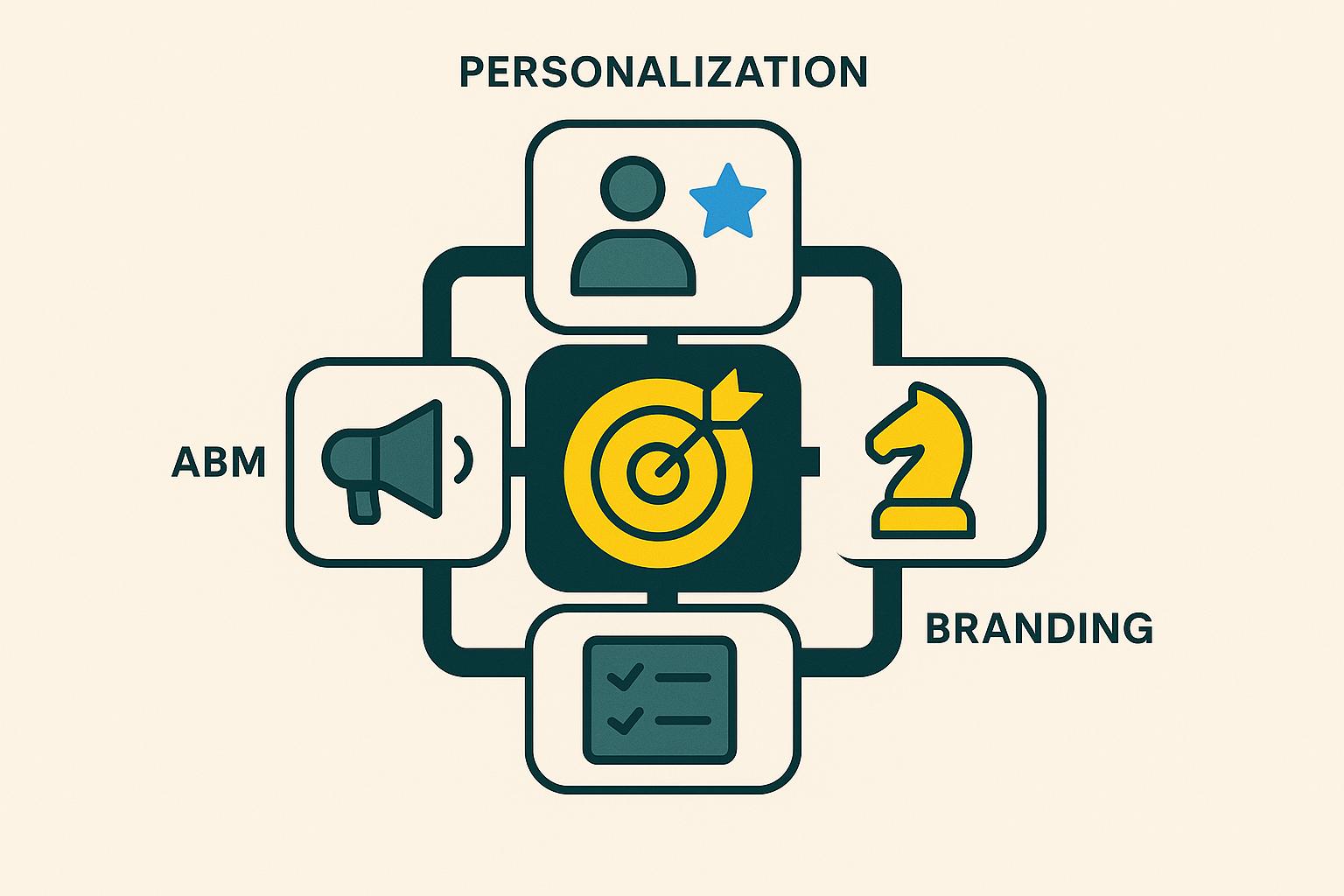


Dynamic content personalization in Account-Based Marketing (ABM) is transforming how businesses approach high-value accounts. Instead of relying on generic outreach, this approach uses real-time data to deliver tailored experiences that align with a prospect's unique needs, behaviors, and stage in the buyer's journey.
Why it matters:
- Personalized content drives higher engagement and faster deal progression.
- It allows companies to scale targeted interactions across hundreds or thousands of accounts without manual effort.
- Decision-makers are more likely to respond to content that directly addresses their challenges.
How it works:
- Data Integration: Combines CRM, marketing platforms, and third-party data for a complete account profile.
- Dynamic Adjustments: Content changes in real-time based on account behavior and firmographic/technographic data.
- Cross-Channel Personalization: Ensures consistent, tailored messaging across websites, email, social media, and sales touchpoints.
Key Differences (Static vs. Dynamic Personalization):
- Static relies on pre-set content variations, while dynamic adapts instantly to behavioral signals.
- Dynamic personalization scales automatically and ensures consistency across all interactions.
Tools like HubSpot, Demandbase, and 6sense make it easier to implement this strategy by automating data collection, content delivery, and personalization at scale. Success depends on aligning sales and marketing teams, mapping content to buyer journeys, and continuously measuring performance using metrics like engagement, deal size, and pipeline velocity.
In short, dynamic personalization ensures every interaction feels relevant and timely, making it a cornerstone of effective ABM strategies.
Creating ABM Landing Pages at Scale with Hubspot
Core Components of Dynamic Personalization Strategies
Crafting effective dynamic personalization strategies for account-based marketing (ABM) hinges on three critical components. These elements transform raw account data into smart, automated content delivery that connects with target prospects at every interaction.
Account Segmentation and Data Collection
The foundation of dynamic personalization lies in meticulous account segmentation and data collection. This process goes beyond basic demographics, diving into firmographic, technographic, and behavioral data to build a comprehensive profile for each target account.
- Firmographic data includes details like company size, revenue, industry, location, and organizational structure.
- Technographic data reveals the technology stack an account uses, helping you identify integration opportunities, competitive gaps, or technical needs.
- Behavioral data tracks how accounts interact with your content, website, and sales team, offering real-time signals about interest and buying intent.
The most effective ABM teams integrate first-party data from their CRM and marketing platforms with third-party enrichment services to create a dynamic, up-to-date view of each account. For example, if a target company announces a new funding round or hires a key executive, automated systems can instantly adjust messaging to reflect these changes.
Adding intent data further enhances segmentation. By analyzing content consumption patterns, search behaviors, and engagement signals across the web, you can pinpoint accounts actively signaling buying intent. This allows for real-time updates to personalization strategies based on where accounts are in their journey.
Modern segmentation tools often leverage predictive scoring models. These models combine multiple data points to identify high-priority accounts and the best timing for outreach. Over time, they learn from past interactions, improving accuracy and enabling more precise personalization decisions. These insights ensure that content aligns with each stage of the buyer journey.
Content Mapping to Buyer Journeys
Once account data is collected, the next step is mapping content to different stages of the buyer journey. This ensures that each account receives information tailored to their current needs and decision-making process.
- Awareness Stage: At this stage, content should address broad business challenges without diving into promotional details. Think industry reports, trend analyses, or educational resources that position your company as a trusted authority. Dynamic systems can automatically deliver this content to accounts showing early-stage interest.
- Consideration Stage: Here, accounts need detailed information about potential solutions. Resources like case studies from similar companies, product comparisons, and ROI calculators become essential. For instance, dynamic systems can surface case studies specific to a prospect's industry or company size, making the content more relatable.
- Decision Stage: Content at this point should tackle specific implementation concerns and build confidence in your offering. Examples include technical specs, timelines, support documentation, and references from current customers. Dynamic systems prioritize this content for accounts exhibiting strong buying signals or engaging with consideration-stage materials.
Dynamic personalization also benefits from progressive profiling, which refines content recommendations over time. As accounts engage with different resources, the system learns more about their interests and challenges, improving future recommendations.
It's equally important to address the needs of multiple personas within an account. For example, IT teams might require technical documentation, while finance stakeholders need ROI analyses. Dynamic systems can cater to both groups simultaneously, ensuring that all decision-makers receive relevant information. With content tailored for every stage, the focus shifts to delivering these messages seamlessly across channels.
Personalized Messaging Across Channels
The final piece of the puzzle is integrating personalized messaging across multiple channels for a cohesive experience. This ensures consistent communication across email, web, social media, and sales touchpoints.
- Website Personalization: Your website acts as the central hub for dynamic content delivery. When known prospects visit, systems can adjust headlines, featured content, and calls-to-action based on their profile and past interactions. This creates an immediate sense of relevance, encouraging deeper engagement.
- Email Campaigns: Dynamic personalization takes email marketing to the next level. Beyond basic personalization like names and company details, advanced systems can tailor subject lines, content blocks, and offers based on account behaviors. For instance, enterprise accounts might see emails emphasizing scalability and security, while smaller businesses receive content highlighting ease of use and affordability.
- Sales Enablement: Personalization insights empower sales teams with real-time data about what content prospects have consumed, which messages they’ve engaged with, and what topics are most likely to move the conversation forward. This makes sales interactions more informed and relevant.
- Social Media and Advertising: Platforms that support account-based advertising allow you to serve tailored creative assets and messaging to specific accounts. This ensures that paid media investments resonate with the right audience.
A key factor in cross-channel personalization is maintaining message consistency while adapting the format and depth to each platform. For instance, if a prospect downloads a detailed whitepaper from your website, follow-up emails should offer related but complementary content - not repetitive information.
Feedback loops play a crucial role in refining personalization. By analyzing how accounts respond to different messages across channels, dynamic systems can identify what works best and automatically optimize future interactions. Over time, this creates a self-improving system that becomes increasingly effective.
For successful implementation, marketing and sales teams must work closely together. Both groups need access to the same account insights and personalization data to ensure consistent messaging and avoid conflicting outreach. Regular alignment meetings can help refine strategies based on feedback from real-world interactions.
Tools and Technologies for Dynamic Personalization
A well-structured tech stack is the backbone of dynamic personalization, streamlining what would otherwise be time-consuming tasks into efficient, scalable processes. In account-based marketing (ABM), these tools transform raw data into meaningful, actionable insights, enabling teams to deliver personalized experiences effortlessly across every touchpoint.
Key ABM and Personalization Platforms
HubSpot provides a robust ecosystem that combines CRM, marketing automation, and content personalization. Its smart content feature dynamically adjusts website pages, emails, and CTAs based on visitor behavior and characteristics. HubSpot’s ABM tools include account-based advertising, target account identification, and deal-based reporting, which ties personalization efforts directly to revenue. With integration capabilities, it pulls data from sales tools, social media platforms, and third-party services, creating a unified view of each account.
Demandbase focuses on enterprise-level account intelligence and personalization. It identifies anonymous website visitors by company and delivers tailored content using firmographic data, technographic insights, and intent signals. The platform’s Account Intelligence provides real-time updates on target accounts, ensuring personalization stays relevant.
ZoomInfo shines in data enrichment and contact intelligence, offering intent data that pinpoints accounts actively researching solutions in your space. This enables marketing teams to prioritize high-intent accounts and customize messaging based on the specific topics those prospects are exploring.
Pardot (now Marketing Cloud Account Engagement) delivers advanced personalization tools, including dynamic content blocks and detailed segmentation features. Its Engagement Studio creates complex customer journeys that adapt to prospect behavior and characteristics. The platform’s native integration with Salesforce ensures seamless sharing of personalization insights between marketing and sales teams.
6sense combines predictive analytics with account-based orchestration to identify accounts likely to purchase before they even engage with your brand. Its Revenue AI analyzes buying signals across the web, predicting which accounts are ready to buy and when.
Role of AI and Marketing Automation
AI plays a crucial role in refining personalization at scale. These platforms use artificial intelligence to process vast datasets and make real-time decisions about content delivery. Machine learning evaluates past engagement, conversion patterns, and account details to predict which content will resonate best with specific prospects.
Natural Language Processing (NLP) scans website content, social media posts, and company communications to uncover key topics and challenges. This allows for more targeted content recommendations and messaging tailored to address prospect pain points.
AI-powered predictive scoring models determine the best timing for personalized outreach, while A/B testing algorithms experiment with various approaches to find and scale what works best. Marketing automation tools also use AI to fine-tune email send times, subject lines, and content selection for individual recipients.
Real-time personalization engines take this a step further, instantly deciding what content to display based on a visitor’s company profile, previous interactions, and current page activity. Conversational AI and chatbots enhance real-time engagement by tailoring interactions using account data and past engagement history.
How LaviPrime Supports Tech Stack Optimization
LaviPrime understands that a well-optimized tech stack is essential for dynamic personalization in ABM. By assessing existing tools and aligning them with business goals, LaviPrime ensures seamless data flow across systems. This integrated approach enables businesses to deliver more personalized experiences, engage target accounts effectively, and scale their growth strategies with confidence.
sbb-itb-7f1e12d
Best Practices for Implementing Dynamic Content Personalization
To make dynamic content personalization work effectively, you need more than just the right tools. It’s about combining detailed planning with precise execution across every customer interaction. Let’s break down how to do this.
Website and Landing Page Personalization
Your website serves as the central hub for delivering personalized experiences. Every element, from messaging to navigation, should adapt to the visitor's profile and needs. For example, if a healthcare company visits your site, the homepage should immediately highlight healthcare-specific case studies, compliance certifications, and pain points - no generic messaging here.
Dynamic navigation menus are key. They guide visitors to content tailored to their role and industry. A C-suite executive might see strategic overviews and ROI calculators, while technical decision-makers are directed to product specs and integration guides. This approach cuts through the noise and speeds up the buying process by showing visitors exactly what they need.
Trust-building happens fast when you use company-specific social proof. Showcase testimonials, case studies, or logos from businesses in the same industry or size category as your visitor. Additionally, personalized resource recommendations based on their company details and prior interactions keep them engaged.
Smart forms can take personalization even further. If your ABM platform already knows the visitor’s company and industry, you can skip basic questions and focus on more targeted ones - like their specific challenges or project timelines.
Finally, make sure your lead magnets and CTAs align with this tailored experience.
Custom Lead Magnets and CTAs
Generic lead magnets won’t cut it for today’s B2B buyers. Instead, offer tools and resources that speak directly to their needs. For example, create industry-specific calculators or role-based content offers. A SaaS company might benefit from a tailored ROI calculator, while a manufacturing firm would prefer metrics and benchmarks suited to their field.
Account-specific research reports are another powerful tool. These reports dive into industry trends, competitive analysis, or regulatory changes that directly impact the target account. Offering this kind of in-depth insight positions your business as a strategic partner, not just another vendor.
Dynamic CTAs (calls-to-action) also play a big role. These adapt based on the visitor’s profile and engagement history. For instance, first-time visitors from a target account might see a “Get Your Custom Demo” button leading to a personalized form. Returning visitors who’ve already interacted with your content might see something like “Speak with Our [Industry] Specialist” instead.
Sales and Marketing Collaboration
Dynamic personalization works best when sales and marketing teams are on the same page. Both teams need to share insights and coordinate their outreach efforts to ensure consistent messaging. Unified account intelligence is crucial - both teams should have access to real-time data on website behavior, content engagement, and responses to personalized messaging.
This alignment also prevents communication missteps. For example, if marketing sends a personalized email about cybersecurity challenges, the sales team should reference that specific topic in their follow-up calls, avoiding generic discovery questions that can feel disconnected.
Shared content libraries can help sales teams continue the personalized experience in direct interactions. These libraries might include industry-specific battle cards, tailored presentation templates, or custom demo scripts that sales reps can use immediately.
Real-time handoffs between marketing and sales are another must. Marketing should provide detailed context about which personalized content resonated most, key pain points mentioned in forms, and behavioral patterns from website visits. This ensures that the transition feels seamless to the prospect.
Finally, feedback loops between sales and marketing are invaluable. Sales conversations can offer insights that help marketing refine personalization strategies over time. Leveraging your integrated tech stack makes this process even more effective.
LaviPrime's ABM consulting takes this collaboration to the next level by aligning sales and marketing efforts with personalized data. Through structured frameworks and shared KPI tracking, businesses can create smooth, personalized experiences that not only accelerate deal timelines but also improve close rates across their target accounts.
Measurement and Optimization
To make dynamic personalization work effectively, you need to keep a close eye on how it performs and fine-tune your approach. This isn't just about short-term engagement - it's about creating a lasting impact. To do this, you’ll need a solid framework to measure how your personalized strategies translate into real business results. ITSMA's Three Rs framework - Reputation, Relationships, and Revenue - offers a straightforward way to evaluate success.
Key Metrics to Track Personalization Success
Using the Three Rs framework, here are the critical areas to measure:
- Reputation Metrics: These reveal how strong and credible your brand is with your target accounts. Keep an eye on factors like brand awareness, content engagement, and website traffic from those accounts. Dive deeper by analyzing your share of voice in industry discussions and conducting sentiment analysis to see how well your messaging resonates.
- Relationship Metrics: Building strong connections is just as important as creating awareness. Track metrics like the number of engaged contacts, executive meetings secured, and Net Promoter Scores. Event participation is another indicator of relationship depth. Even feedback from your sales team can show whether your personalization efforts are hitting the mark.
- Revenue Metrics: At the end of the day, revenue is where the rubber meets the road. Metrics like Customer Lifetime Value, average deal size, sales cycle length, pipeline velocity, ROI, and revenue retention provide a clear picture of how personalization impacts your bottom line. Use these insights to continuously refine your strategies and drive better results.
Conclusion
Dynamic personalization takes outreach to the next level by turning one-size-fits-all messaging into tailored, impactful experiences for your most important accounts. By combining smart segmentation, thoughtful content strategies, and the right technology, you can create interactions that truly connect with your audience at every stage.
To succeed, it's essential to strike a balance between automation and human insight. Automated tools can handle much of the heavy lifting, but strategic human input ensures your efforts remain relevant and effective. Tracking key metrics is equally important - not just to measure current performance, but to guide future improvements. Collaboration between sales and marketing teams is critical here, as shared insights and feedback help refine personalization strategies over time.
Getting started is simpler than you might think. Start small by focusing on your highest-value accounts. Fine-tune your approach, ensure your data is accurate, and use tools that integrate seamlessly with your existing systems. Equip your team with the resources and training they need to execute effectively, and you'll lay the groundwork for long-term success.
For companies aiming to implement or scale their ABM programs, LaviPrime offers expert support. From defining your ideal customer profile (ICP) and crafting ABM strategies to training your team and optimizing campaigns, LaviPrime provides the tools and expertise to help you achieve measurable growth.
With a clear strategy and a commitment to personalization, you're positioning your brand for success in a competitive marketplace. The future of B2B marketing belongs to businesses that deliver relevant, timely, and meaningful experiences. Dynamic content personalization isn't just an option - it's your edge in standing out from the crowd.
FAQs
How does dynamic content personalization enhance Account-Based Marketing (ABM) strategies?
Dynamic content personalization takes Account-Based Marketing (ABM) to the next level by tailoring messages specifically for each target account. This strategy helps grab attention, boosts engagement, and builds stronger connections by addressing the distinct needs and challenges of individual accounts.
When businesses prioritize high-value accounts and offer real-time, personalized experiences, they can speed up the buyer's journey and see a higher return on investment. Customizing your messaging ensures it strikes a chord with decision-makers, paving the way for better results and lasting success in B2B marketing.
What are the essential elements for implementing dynamic content personalization in Account-Based Marketing (ABM)?
To make dynamic content personalization work effectively in Account-Based Marketing (ABM), it's all about leveraging real-time data. This allows you to deliver content that's tailored to specific accounts and craft messaging that truly resonates with them. Automation can play a big role here, helping you adjust content on the fly based on user behavior and insights.
Begin by pinpointing your target accounts and aligning personalized content with where they are in the buyer's journey. Keep a close eye on performance metrics and make adjustments regularly to maintain engagement and improve results. By focusing on these steps, you can build deeper connections with your audience and achieve stronger outcomes.
What are the best ways to measure the success of dynamic content personalization in Account-Based Marketing (ABM)?
To gauge how well dynamic content personalization is working in an ABM strategy, businesses should keep an eye on a few critical metrics. These include engagement rates (like click-through rates, website visits, and time spent on specific pages), conversion rates, and average deal sizes. Together, these numbers offer a snapshot of how effectively personalized content connects with your target accounts.
On top of that, using real-time data insights and content analytics can give a deeper understanding of campaign performance. This approach helps pinpoint what’s working and what needs adjustment. By consistently tracking and fine-tuning these metrics, you can ensure your personalization efforts are driving results that matter and contributing to tangible business growth.